Category: AI Agents

  • Qwen-Image-2.1 at 6 steps: does the turbo keep what beat FLUX?

    Qwen-Image-2.1 at 6 steps: does the turbo keep what beat FLUX?

    A sequel to Qwen-Image-2.1 vs FLUX.2 Klein — full capability matrix. Same prompts, same seeds, same scoring rubric. This post covers only what changed.

    14.7 s
    per image at 8 steps (11.3 s at 6), vs 47–54 s for base Qwen
    4.52
    overall score at 8 steps (4.46 at 6), vs 4.45 base and 4.19 FLUX
    12 / 12
    identity edits held, despite the model card’s warning

    Where we left off

    Last time Qwen-Image-2.1 beat FLUX.2 Klein 4.45 to 4.19 (0–5 scale) across 26 prompts. That score is after the correction for the three-legged jumper.

    Qwen’s lead came from three things: English text, Devanagari text and edits that combine two reference images. It paid for them with time: 52 s per image against FLUX’s 28 s, and a research-only licence.

    Five days later Viggle released Qwen-Image-2.1-viggle-turbo v0.2.1:

    • It’s a distilled LoRA (1.3 GB) that runs on top of the same base weights.
    • It draws an image in 6 steps instead of 40 and drops classifier-free guidance.
    • Viggle’s model card claims about 5× the speed, with “very competitive” quality.
    • It names two weak spots: small dense text and identity-preserving edits.

    Those are exactly the two things we keep Qwen for, so we tested both.

    What we ran

    • Every prompt from the first round, same seeds: all 26 capability-matrix prompts plus the 14 bulletin-thumbnail and outfit-edit prompts from the experiment before it.
    • 6 new dense-text prompts: a chalkboard menu with six prices, a slide with four bullets, a newspaper front page, a five-row scores infographic, a two-line Hindi news ticker and a nutrition label.
    • Settings: the turbo at 6 steps (the recommended schedule) and at 8 steps (Viggle’s suggested fix for dense text), shipped scheduler, true_cfg_scale=1.0. Hardware: DGX Spark, GB10.
    • Baseline check: fresh 40-step renders of the base model reproduced the first round’s images bit-exactly, so the base images below are the same ones the first post scored.

    Speed: the headline

    Qwen base, 40 steps Qwen turbo, 6 steps Qwen turbo, 8 steps FLUX.2 Klein (first post)
    Text-to-image, 1024² / 1280×720 47–54 s 11.3 s 14.7 s 28.2 s median
    Edit, 1–2 references, 1024×1536 60–89 s 20.9 s 26.5 s 87 s (1 ref max)
    Peak memory ~43 GB ~43 GB ~43 GB ~46 GB

    The turbo is about 4.5× faster than base for text-to-image and 3–4× for edits.

    This flips the speed argument from the first post: Qwen was the slow, careful option, and now it’s the fastest image model we run. FLUX ran on the Mac Studio, so this isn’t the same hardware, but it’s the same job.

    Scoreboard: three slots move at 6 steps, two at 8

    Same rubric as last time: adherence, text, anatomy, realism, artifacts, each 0–5. I re-scored only the cells where the turbo image differs from base; everything else carries over.

    Slot FLUX Qwen base Turbo 6 Turbo 8
    1 · English text 4.06 4.78 4.67 4.78
    2 · Devanagari 3.33 4.83 4.83 4.83
    3 · Portraits 4.62 4.38 4.62 4.62
    4 · Full body & pose 4.12 4.25 3.88 4.25
    5 · Groups 4.12 4.38 4.25 4.38
    6 · Action / expression 4.38 4.38 5.00 5.00
    Slots 7, 8, 9, 10 — unchanged unchanged unchanged
    All slots 4.19 4.45 4.46 4.52

    At 8 steps the turbo beats the model it was distilled from. At 6 steps it only draws level: its gains on the jump and the portraits are offset by two slips, a street-sign glitch and a hand with a finger in place of the thumb. Here’s what drives each number.

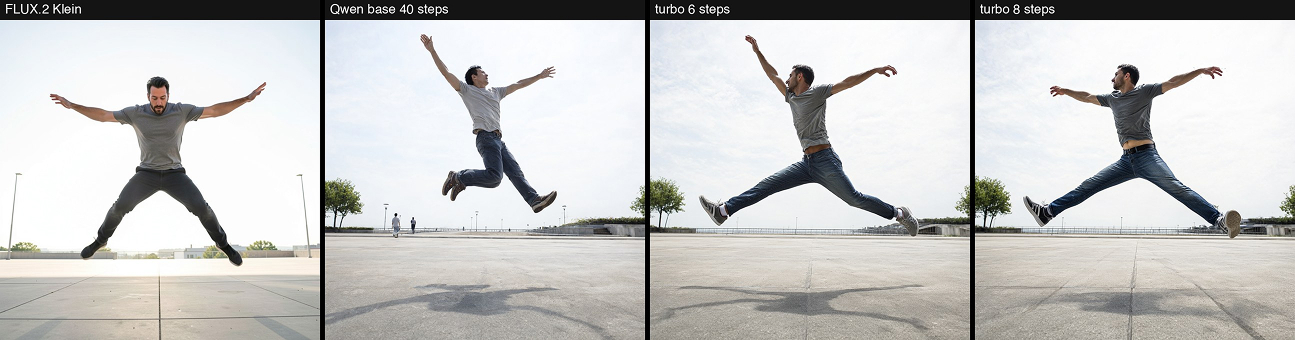
    1.The three-legged jumper is fixed

    jumper-pics
    FLUX · Qwen base 40 · turbo 6 · turbo 8. Base has three legs; both turbo versions draw a clean two-legged star jump with a shadow.

    This was the error caught on manual review after the first post was published. Base Qwen’s jumper had a proper ground shadow but three legs, and FLUX’s had the right limbs but no shadow.

    Both turbo versions draw a clean star jump: two legs, both fully extended as the prompt asked, a ground shadow and the whole body in frame. It’s the first image in the series that gets the physics and the anatomy right together. Slot 6 goes from a tie to a clear Qwen win.

    2. Dense Hindi: the turbo made fewer mistakes than its teacher

    hindi_ticker_zoom
    The ticker band at full resolution: base 40 · turbo 6 · turbo 8.

    The target was “दिल्ली में आज भारी बारिश की संभावना / मौसम विभाग ने येलो अलर्ट जारी किया”, plus “ताज़ा खबर” in a corner box.

    Errors What went wrong
    Base, 40 steps 3 दिली (dropped the ल्ल conjunct), वारिश (ब→व), खवर (ब→व)
    Turbo, 6 steps 2 वारिश: ब→व, and the final श is a malformed blend of स and श
    Turbo, 8 steps 1 malformed ल्ल in दिल्ली

    It’s one seed, so I wouldn’t claim the turbo is better at Devanagari. But the specific weakness Viggle warned about didn’t show up in Hindi.

    The three single-line Devanagari cases from the first post were letter-perfect in all three Qwen versions: the poster, the tea-stall board and the Hinglish lower-third. FLUX still garbles every Devanagari character.

    3. The only English text miss: a 6-step glitch

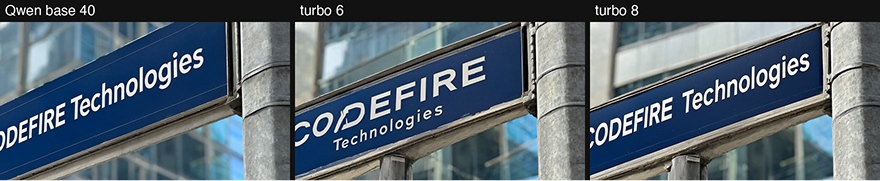
    streetsign_codefire
    A stray stroke cuts through “COD” at 6 steps; 8 steps is clean.

    Across all the English text, only one image had a mistake: the CODEFIRE street sign at 6 steps, where a stray stroke cuts through “COD”. At 8 steps it’s clean.

    That’s the whole English text story. Everything else was letter-perfect at 6 and 8 steps, including the menu’s six prices, the slide’s four bullets, the infographic rows and the nutrition label.

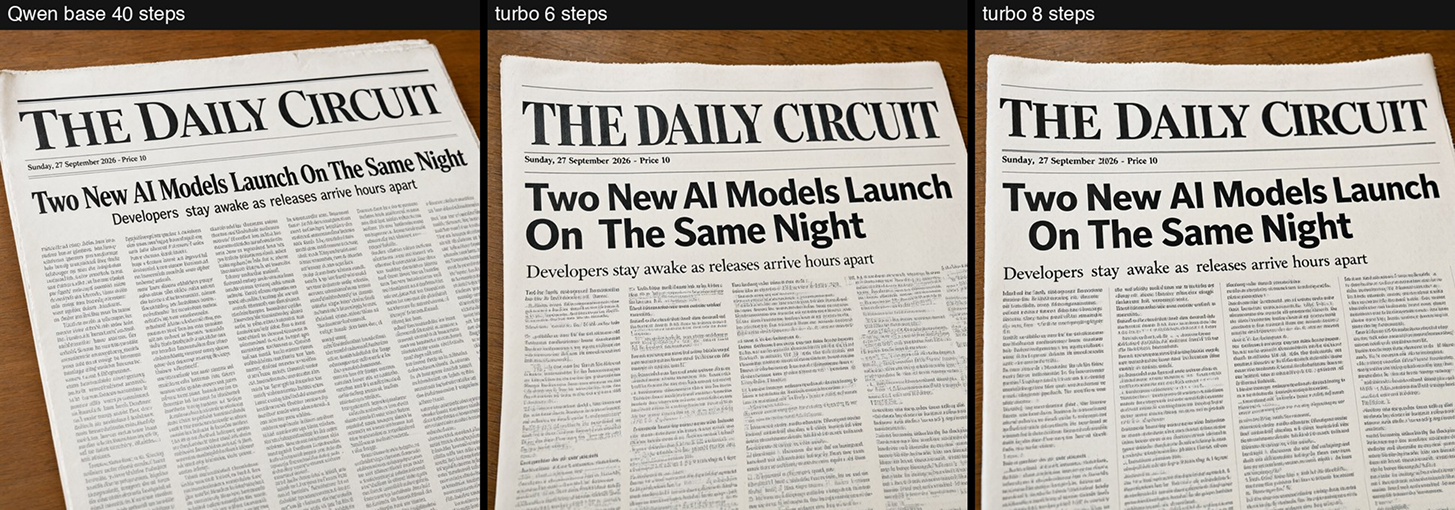
    dense_newspaper_parity
    Every specified line is exact in all three: masthead, date line, headline and subhead.

    The newspaper shows the pattern: every line we specified is exact in all three versions. The body columns are filler text in all three, which is fine because we never asked for body text.

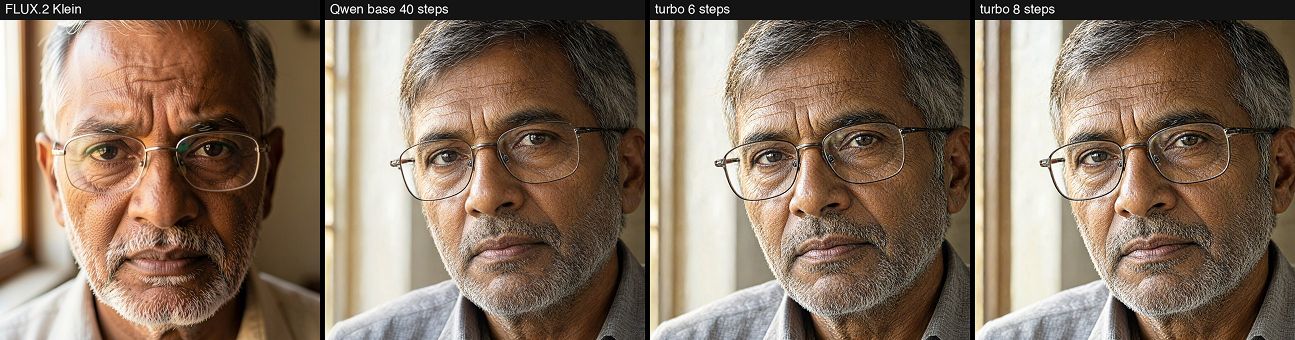
    4. Portraits: the beautification goes away

    elder_portrait
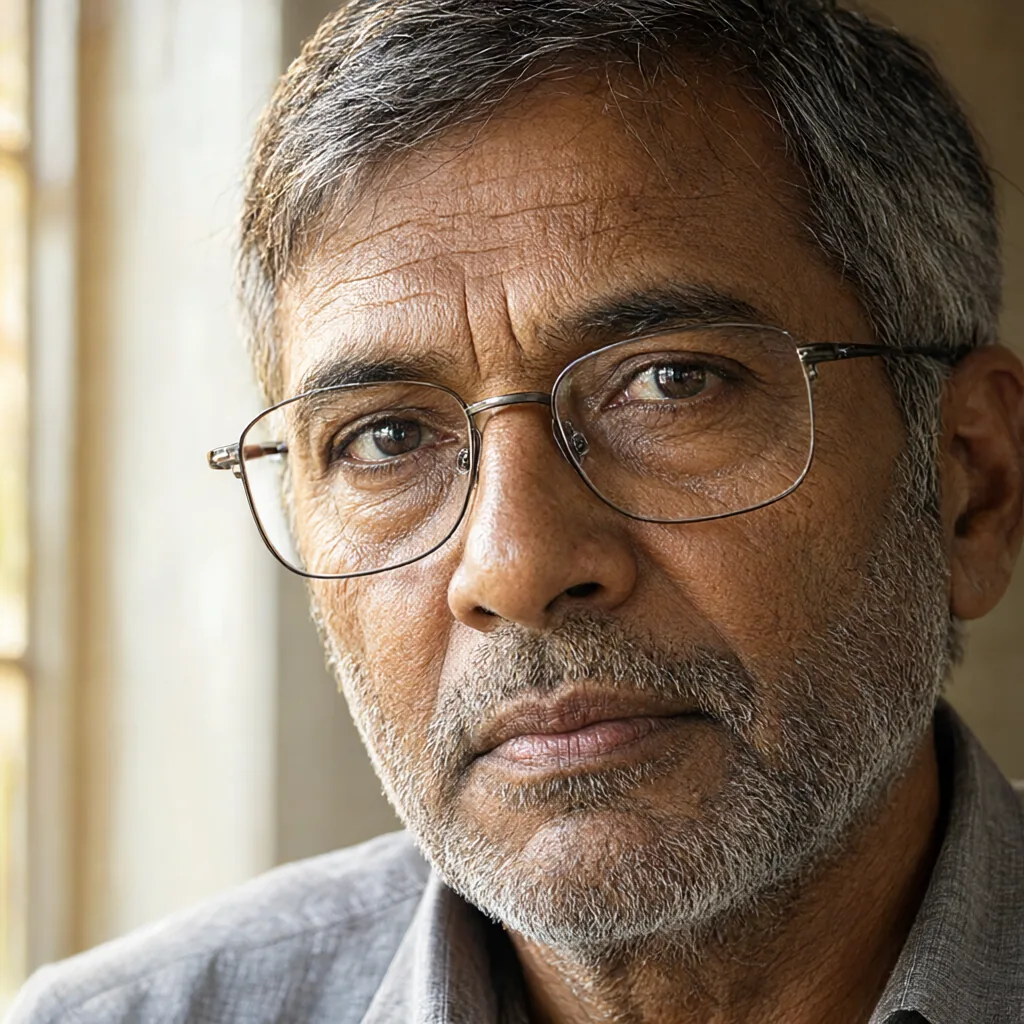
    FLUX · Qwen base 40 · turbo 6 · turbo 8. The turbo keeps pores, forehead lines and crow’s feet.

    The strongest complaint about base Qwen in round one was that it smooths skin and takes about ten years off. The “60-year-old with deep wrinkles” came out looking around 50.

    The turbo keeps noticeably more texture: pores, deep forehead lines and crow’s feet. The same happens on the 32-year-old presenter and the laughing woman. That closes most of the portrait gap. Slot 3 now ties FLUX at 4.62, where base trailed at 4.38.

    My guess at the cause: distillation strips out some of the teacher’s “prettifying” push. Whatever the reason, for presenter work it’s a clear improvement.

    5. The 6-step slips: a stray blob and a missing thumb

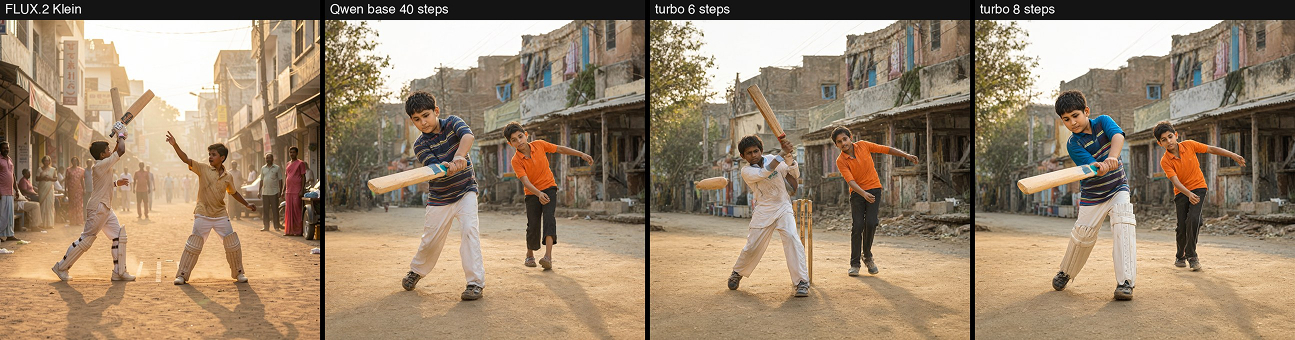
    boys_playing_cricket
    At 6 steps the batter raises the bat and stumps appear, but a stray blob floats beside him. 8 steps returns to base’s layout.

    Viggle claims 0% layout drift, and it held for 45 of our 46 cases: same camera, same composition, same subjects as base. The exception was the street cricket shot at 6 steps. The batter changes into whites and actually raises the bat, which is closer to the prompt, and stumps appear, but a stray blob floats beside him. At 8 steps the image goes back to base’s layout, with batting pads added.

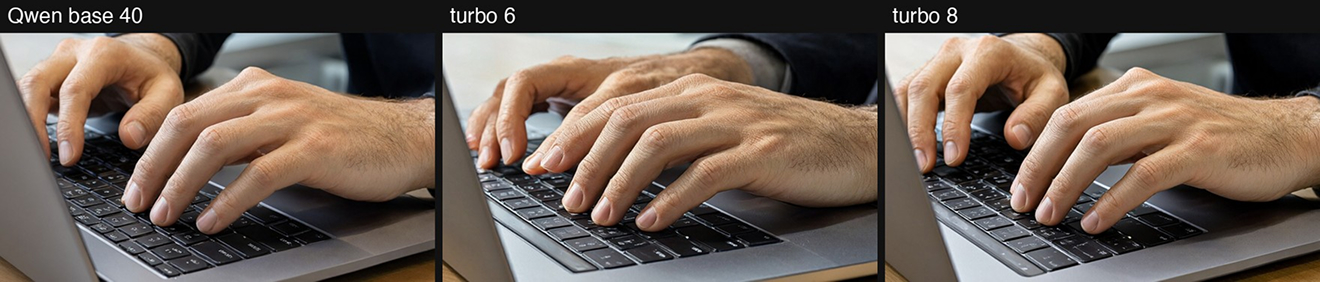
    typing_thumb
    At 6 steps the right hand has a fifth finger where its thumb should be. Base and 8 steps both draw a correct hand.

    The second slip is in the typing shot. At 6 steps the right hand has a fifth finger-shaped digit where the thumb should be, a digit-count failure that base and the 8-step version both avoid. I scored its anatomy 2 out of 5, which drops the full-body slot for the 6-step turbo to 3.88, below FLUX.

    Every slip in this test happened at 6 steps and was gone at 8: the sign glitch, the cricket blob and the extra finger, plus one of the Hindi errors. The two extra steps cost about 3 seconds.

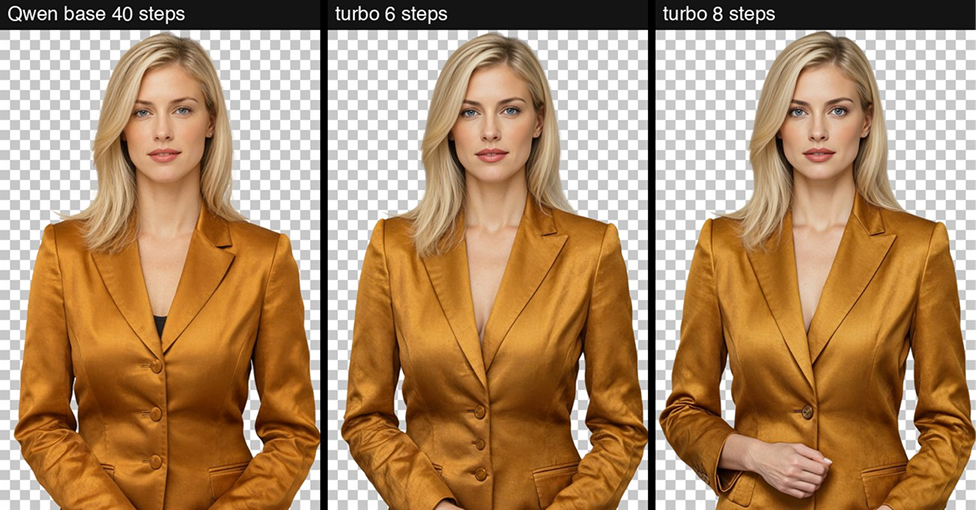
    6. Wardrobe drift on the transparent-background images

    sticker_wardrobe
    Base puts a black top under the blazer; the turbo drops it.

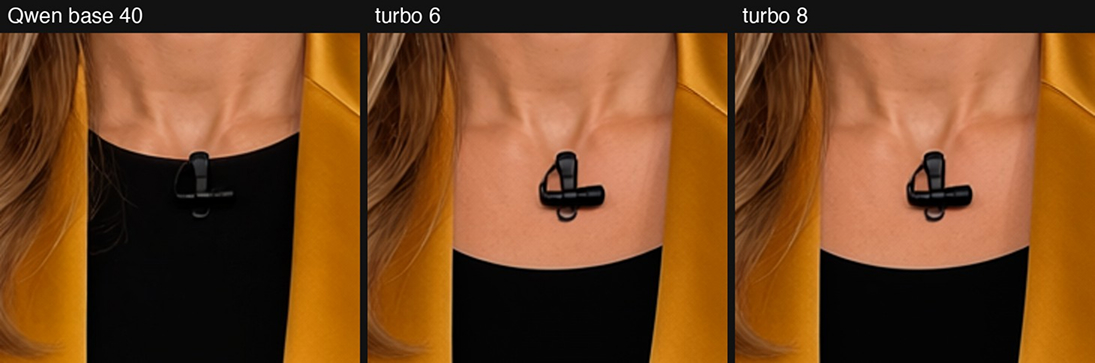
    On the transparent presenter sticker, base Qwen put a black top under the amber blazer. The turbo drops the top, leaving a plunging neckline, and at 8 steps adds a hand across the chest.

    mic_zoom
    With the neckline lowered, the turbo’s clip-on mic sits on bare skin, attached to nothing.

    The transparent Sarah edit shows the same drift in a way that matters more. The turbo lowers the neckline, so the clip-on mic ends up on bare skin, attached to nothing, while base clips it to her top.

    Transparency itself works fine in the turbo. The lesson is to spell out the layers (“a black crew-neck top under the blazer”) when you use it for presenter wardrobe.

    What didn’t change, and that’s the point

    two_presenters_parity
    The two-reference presenter shot: turbo is almost indistinguishable from base, at 16 s instead of 60 s.

    Identity-preserving edits were the other weakness Viggle warned about, and I couldn’t find the problem in any of our 12 edit cases:

    • 10 Sarah outfit edits: amber, cream, lavender and wine with a text instruction; the same four with a second reference image for the garment; navy at two seeds;
    • the newsroom background swap;
    • the two-presenter shot built from two reference images.

    In each one the turbo image is almost indistinguishable from base. Face, hair, hands and pose all hold, at about a quarter of the time.

    Also unchanged: groups, walking and full body; the spatial-reasoning test (cube on sphere, left of the pyramid); the mug, the courtroom sketch, and the 9:16 and 16:9 landscapes.

    Two base failures the turbo did not fix:

    • The typing shot still crops out the man. All three Qwen versions show only hands and a sleeve.
    • The kite is still a bird of prey, not the red kite FLUX drew.

    Verdict

    1. Turbo at 8 steps replaces base as the default for everything we used Qwen for: English and Devanagari text, two-reference presenter shots, outfit edits and native transparency. At about 15 s per image it’s 3.5× faster than base, and it scored higher (4.52 vs 4.45).
    2. Use 6 steps for quick drafts only. It’s another 3 seconds faster, but every slip in this test happened at 6 steps: a text glitch, a stray blob, an extra finger and one more Hindi error.
    3. Keep base 40 around as a fallback for multi-constraint edits, which Viggle still flags, even though our cases didn’t expose the problem.
    4. The licence hasn’t changed. The turbo inherits the Qwen Research licence, so it’s non-commercial only. That limits where any of this can ship, exactly as it did for base.

    Caveats

    • One seed per prompt. This is a strong impression, not a statistical result. Viggle’s own 96-prompt evaluation is the better source for averages.
    • Scored by the same reviewer against the same rubric, re-scoring only images that visibly differ from base. Small differences in scoring judgement can move a slot by ±0.1.
    • Different hardware for FLUX: its timings are from the Mac Studio, so treat the cross-model speed comparison as practical, not controlled.

    Reproduce

    # DGX, ~/qwenimage (same venv as round one + `peft`)
    hf download Viggle/Qwen-Image-2.1-viggle-turbo \
       Qwen-Image-2.1-viggle-turbo-v0.2.1-6step-lora-r256.safetensors scheduler/scheduler_config.json
    python turbo_ab/turbo_run.py     # 2 base re-renders (bit-exact check) + 12 cases × turbo 6/8
    python turbo_ab/turbo_run2.py    # remaining 28 cases × turbo 6/8 + 6 dense-text × base/6/8
    pipe.load_lora_weights("Viggle/Qwen-Image-2.1-viggle-turbo",
        weight_name="Qwen-Image-2.1-viggle-turbo-v0.2.1-6step-lora-r256.safetensors")
    pipe.scheduler = FlowMatchEulerDiscreteScheduler.from_pretrained(
        "Viggle/Qwen-Image-2.1-viggle-turbo", subfolder="scheduler")
    SIGMAS = {6: [1.0, 0.9375, 0.875, 0.75, 0.5, 0.25],
              8: [1.0, 0.96875, 0.9375, 0.90625, 0.875, 0.75, 0.5, 0.25]}  # extra steps split only 1→0.875
    img = pipe(prompt=..., num_inference_steps=6, sigmas=SIGMAS[6], true_cfg_scale=1.0).images[0]

    Qwen-Image-2.1 and the Viggle turbo are released under the Qwen Research licence (non-commercial). Built with Qwen.

  • Qwen-Image-2.1 vs FLUX.2 Klein

    Qwen-Image-2.1 vs FLUX.2 Klein

    Two models, identical prompts, ten capability categories. One is a 7B research-licensed model running 40 bf16 steps on a DGX Spark; the other a 9B non-commercial model running 4 MLX steps on a Mac. This is what happened when we asked both to do the same jobs.

    Qwen-Image-2.1 7B
    4.49
    out of 5 · wins text & identity
    FLUX.2 Klein 9B
    4.19
    out of 5 · wins realism & speed
    Gap
    0.30
    almost entirely text rendering
    Models Qwen-Image-2.1 7B  vs  FLUX.2 Klein 9B
    Slots 10 capability categories, 26 prompt/seed jobs
    Hardware DGX Spark GB10 (CUDA 13, aarch64)  vs  Mac Studio M3 Ultra (mflux/MLX)
    Prompts Byte-identical — both runners import the same matrix.py
    Scoring 0–5 on prompt adherence, text correctness, anatomy, realism, artifacts
    Overall Qwen 4.49 / 5  ·  FLUX 4.19 / 5

    1. High-level comparison

    The bottom line first

    Qwen wins the headline number by 0.30 points — but that gap is almost entirely text. Strip out the two text slots and FLUX is ahead. Qwen is best understood not as “the better image model” but as a text-rendering specialist that also happens to do images. It also ships under a research-only licence, which matters if you intend to use the model itself commercially (see section 5).

    Category scorecard

    # Category Qwen FLUX Winner
    1 Text rendering — English 4.78 4.06 Qwen
    2 Text rendering — Hindi (Devanagari) 4.83 3.33 Qwen
    3 Humans — portrait 4.38 4.62 FLUX
    4 Humans — full body & pose 4.25 4.12 tie → FLUX
    5 Humans — groups & diversity 4.38 4.12 Qwen
    6 Humans — action / expression 4.38 4.38 tie → FLUX
    7 Reference-image editing 4.38 4.06 Qwen
    8 RGBA / transparent output 4.29 4.00 Qwen
    9 Aspect ratios & speed 3.56 5.00 FLUX
    10 Prompt adherence stress 5.00 5.00 tie → FLUX
    ALL SLOTS 4.45 4.19

    Ties are decided in FLUX’s favour when the margin is under 0.15 — it is faster and its outputs carry fewer restrictions. Without that rule the raw means are Qwen 4.45 / FLUX 4.19.

    What each model actually buys you

      Qwen-Image-2.1 FLUX.2 Klein
    English text in pixels 4/4 strings letter-perfect 0/4 — every one has a character slip
    Devanagari 55/55 characters correct 55/55 wrong (confident gibberish)
    Identity preservation (edits) 5/5 3/5 — re-makes the face
    Instruction-following (edits) 3/5 — ignores garment detail 5/5
    Multi-reference (2 people) Yes Impossible — single-ref API
    Native alpha channel Yes, one pass No — needs rembg, leaves green fringe
    Landscapes / aspect ratios Weak (2/5) Excellent (5/5)
    Skin / portrait realism Good, smoothed Best in test
    Speed (median) 51.8 s/image 28.2 s/image
    Speed at 9:16 tall 104 s 231 s
    Licence Research only — no commercial use Non-commercial 9B weights; outputs cleared for commercial use

    The three things Qwen wins outright

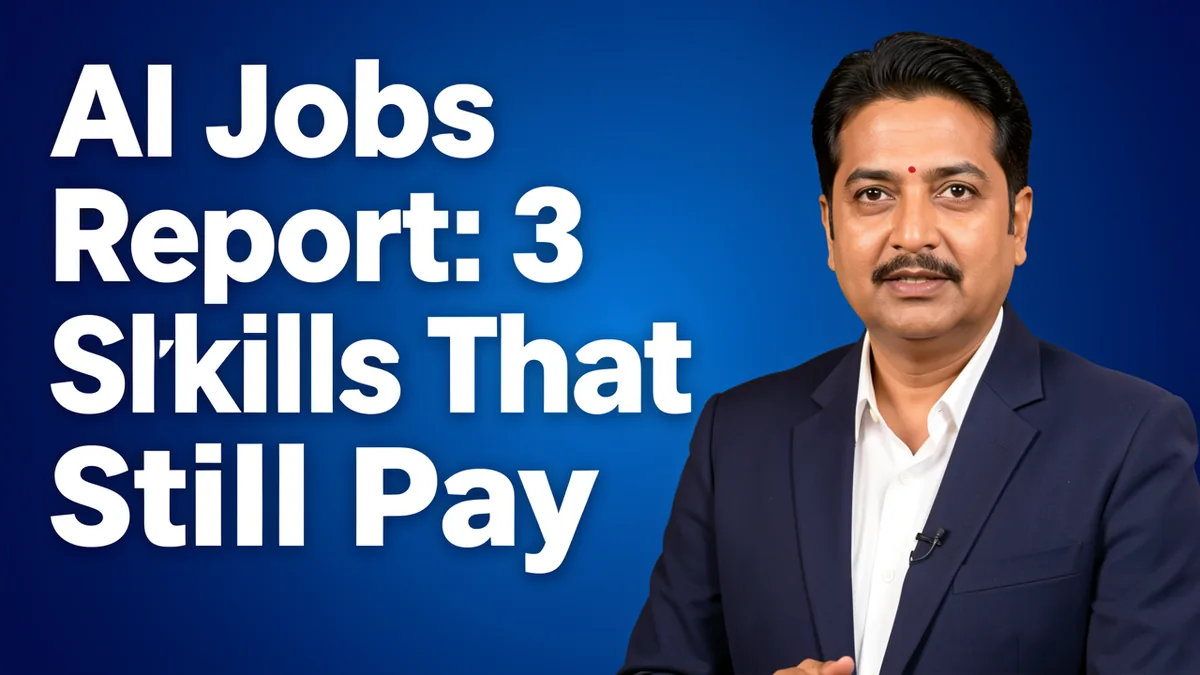
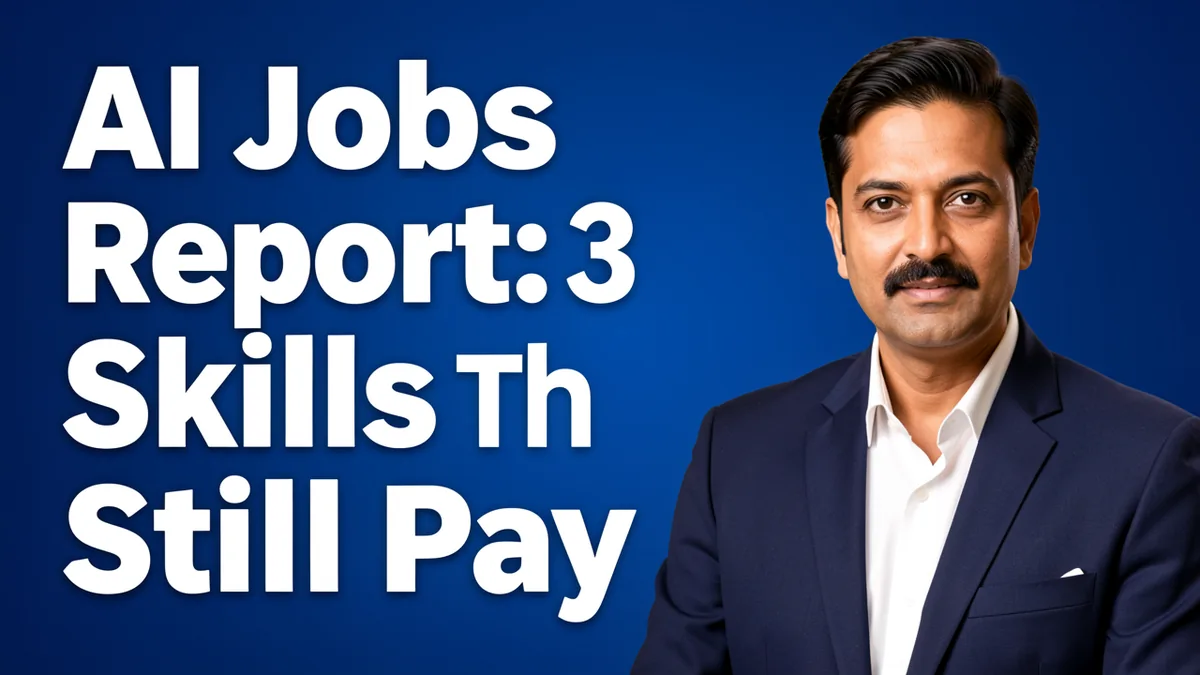
    1. English text you can trust. Including a 38-character headline rendered exactly at two different seeds. FLUX’s errors (3 SIkills, Skills Th, Technlogies, latancy) are all single-character slips in otherwise crisp typography — which is worse, not better, because the image looks right until a human reads it.
    2. Devanagari at all. Not a quality gap — a capability gap. FLUX emits Devanagari-shaped noise, crisply and confidently. Correct nuqta, correct matras, correct shirorekha.
    3. Multi-reference identity. Two named people in one frame. FLUX’s edit endpoint accepts exactly one reference image, so this task cannot be expressed through it at all.

    The things FLUX wins

    Portraits and skin texture, landscapes, every aspect ratio, edit instruction-following, speed, deployment, and output rights. Ties go to FLUX, and most slots were ties.

    2. How the test was run (fairness notes)

    • One shared prompt source. Both runners import matrix.py, so neither model ever saw a prompt the other did not get. Two deliberate differences were forced by the models themselves:
      • RGBA (slot 8): Qwen got the literal transparency wrapper; FLUX got the same subject on a flat chroma-green field and was cut with rembg -m u2net, because FLUX cannot emit alpha.
      • Slot 7c: Qwen got two references; FLUX got one, because its edit endpoint accepts exactly one.
    • Not apples-to-apples on compute. Qwen runs 40 bf16 steps on a GB10; FLUX runs 4 MLX steps on an M3 Ultra. Timings are reported as measured, not normalised.
    • Both models floor requested dimensions — Qwen to a multiple of 32, FLUX to a multiple of 16. Ask for multiples of 32 and neither surprises you.
    • Scores are hand-assigned 0–5, generated into tables by scores.py. Every image below is the untouched output of that run.

    3. Round by round

    Slot 1 — Text rendering, English

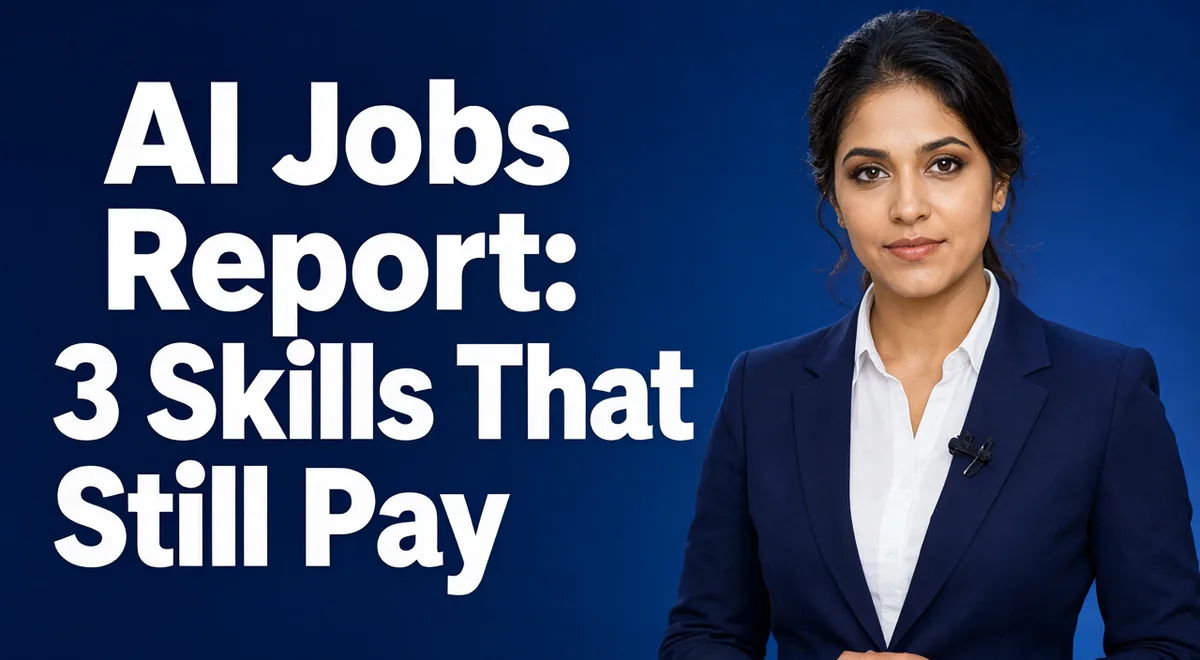
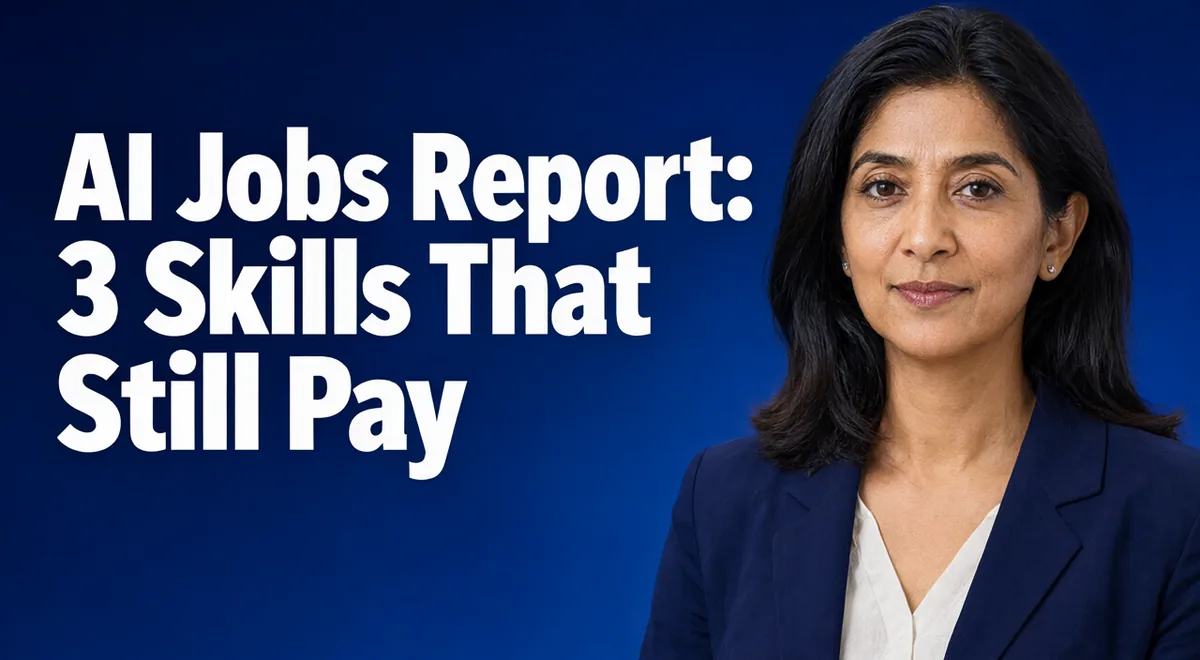
    Prompt (s1a, seeds 101 & 202): “A YouTube-style news bulletin thumbnail. A bold white sans-serif headline reading exactly “AI Jobs Report: 3 Skills That Still Pay” fills the left two thirds in three stacked lines, with a confident Indian news presenter in a navy blazer on the right. Deep blue gradient background, high contrast, crisp clean typography, no other text.”

    Qwen-Image-2.1 FLUX.2 Klein
    jobs-report1 jobs-report2
    Seed 101 — headline exact Seed 101 — “3 SIkills” (inserted glyph)
    jobs-report1 jobs-report4
    Seed 202 — headline exact again Seed 202 — “Skills Th” (“That” truncated)

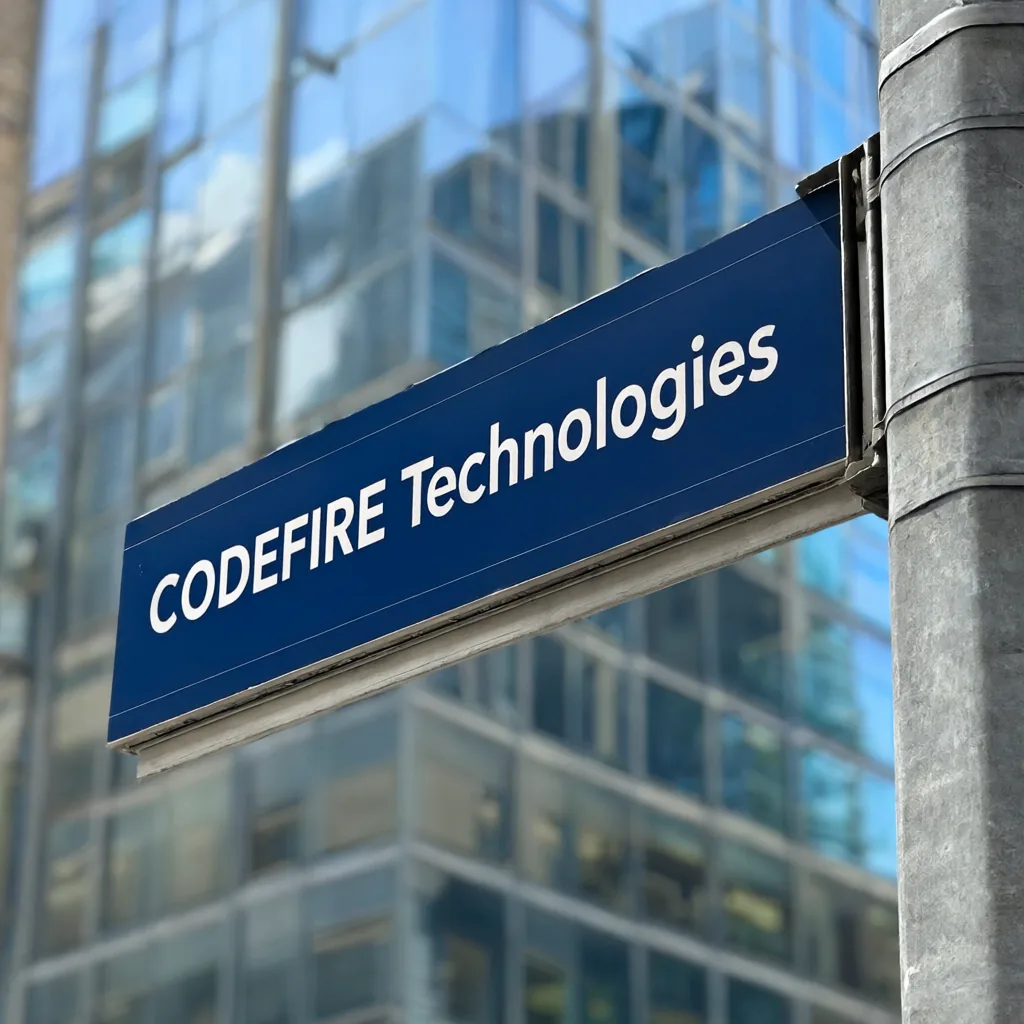
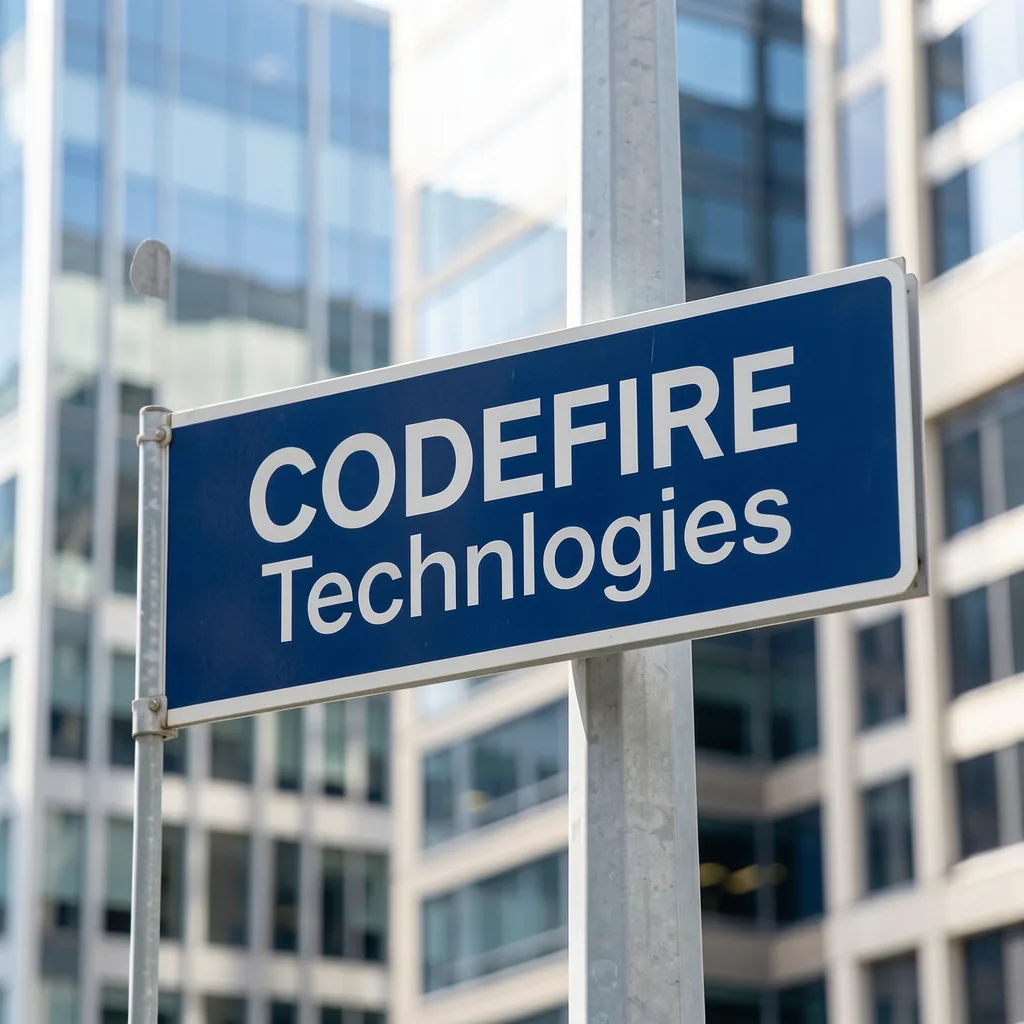
    Prompt (s1b): “A photograph of a city street sign mounted on a metal pole. The sign reads exactly “CODEFIRE Technologies” in clean white capital letters on a dark blue background. Bright daylight, shallow depth of field, blurred glass office buildings behind, photorealistic.”

    Qwen FLUX
    codefire1 codefire2
    “CODEFIRE Technologies” exact “CODEFIRE Technlogies” — dropped the o

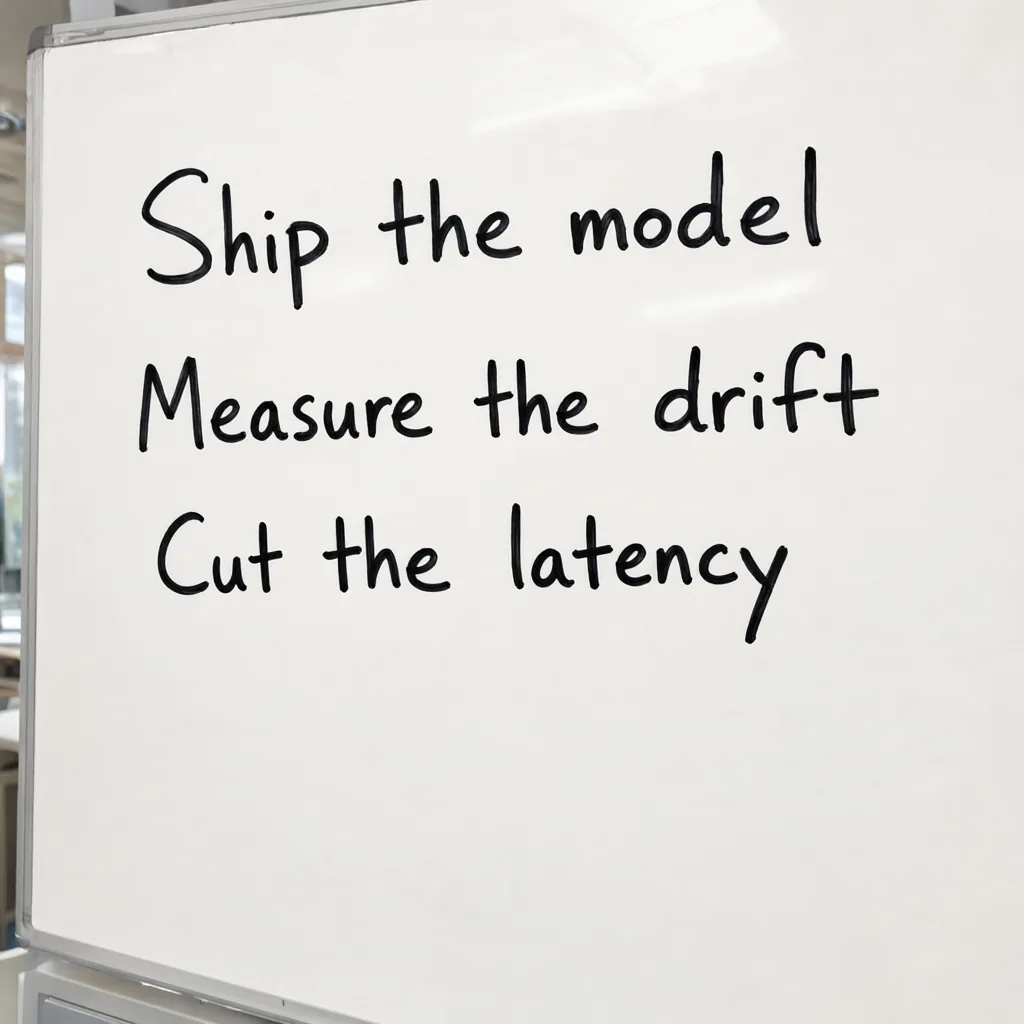
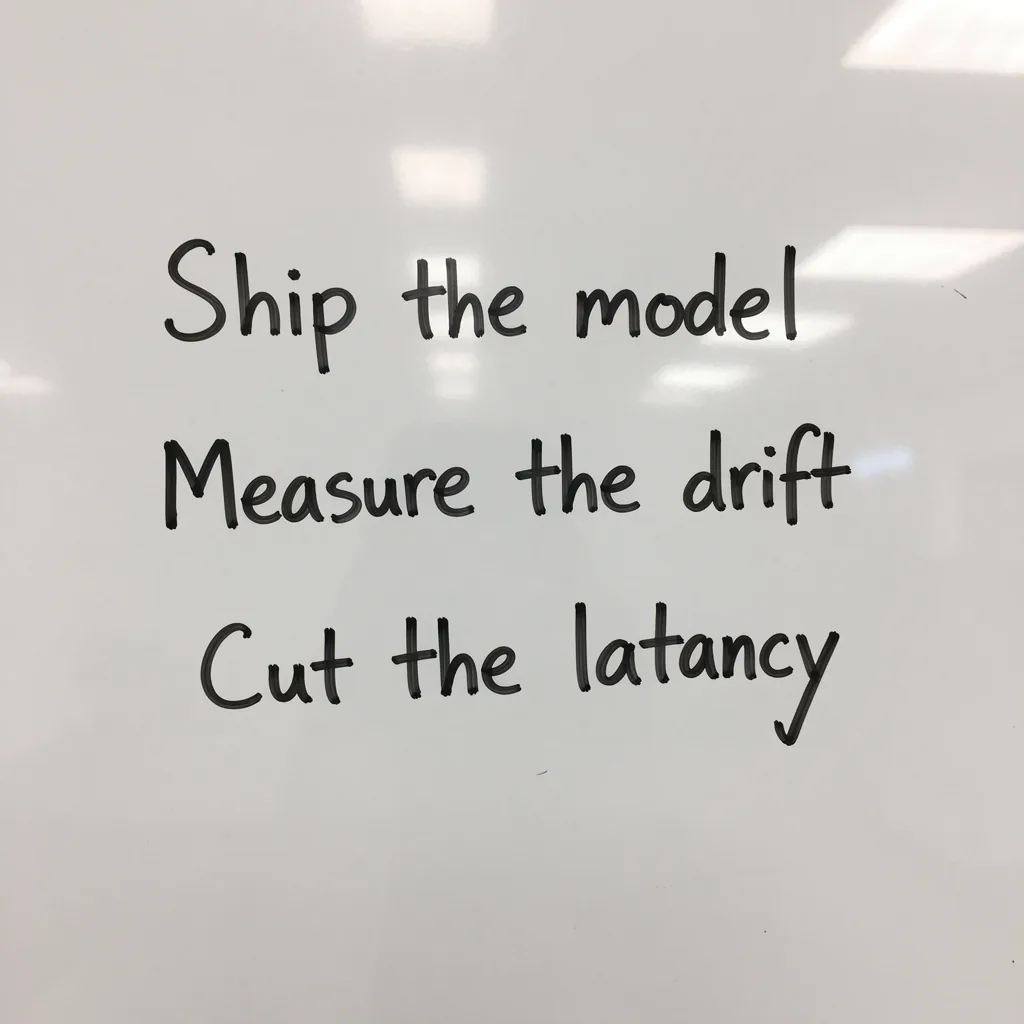
    Prompt (s1c): “A close-up photograph of a white office whiteboard with exactly three short handwritten lines in black marker. The first line reads “Ship the model”. The second line reads “Measure the drift”. The third line reads “Cut the latency”. Neat handwriting, marker texture, bright office lighting, no other writing on the board.”

    Qwen FLUX
    ship-model1 ship-model2
    All three lines exact “Cut the latancy” — one wrong vowel

    Verdict: Qwen, decisively. Qwen 4/4 strings letter-perfect. FLUX 0/4 — every error a single character in otherwise beautiful typography. 4.78 vs 4.06.

    Slot 2 — Text rendering, Hindi (Devanagari)

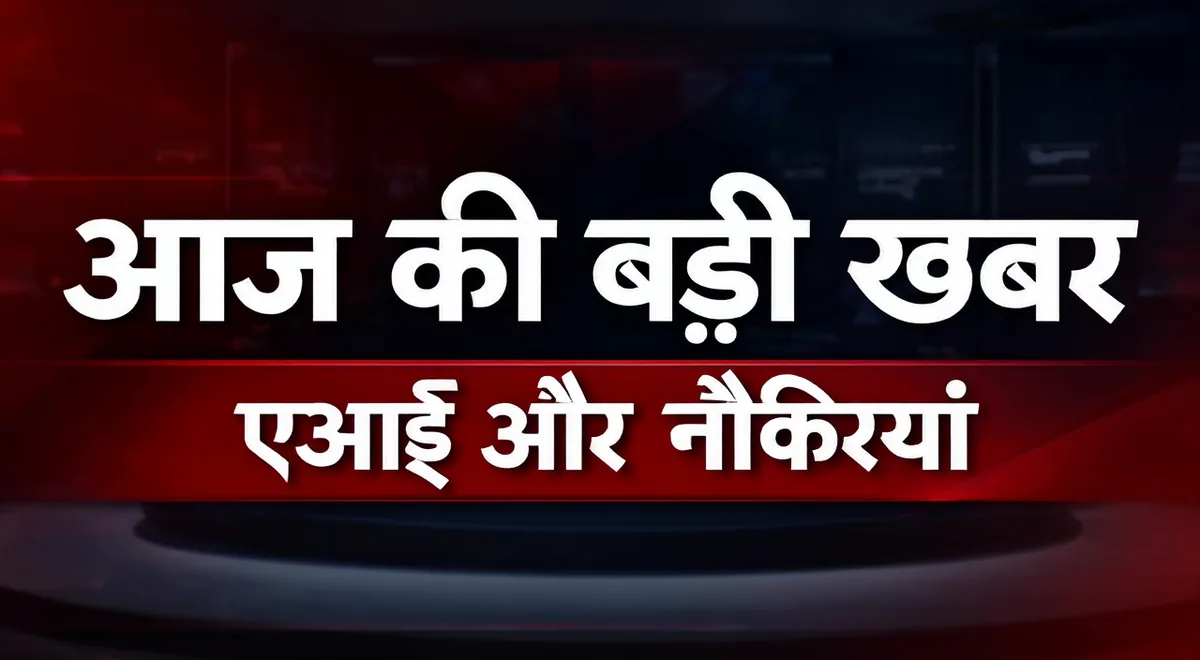
    Prompt (s2a): “A Hindi television news poster. A large bold Devanagari headline across the top reads exactly “आज की बड़ी खबर”. Below it a smaller Devanagari subheading reads exactly “एआई और नौकरियां”. Deep red and white broadcast graphics, dark studio background, crisp correct Devanagari typography, no other text.”

    Qwen FLUX
    aaj-ki-khabar1 aaj-ki-khabar2
    Both lines exact. 0/29 chars wrong “अरको फवटे खमर / थाी कर माक्ख़ीबों” — ~30/30 wrong

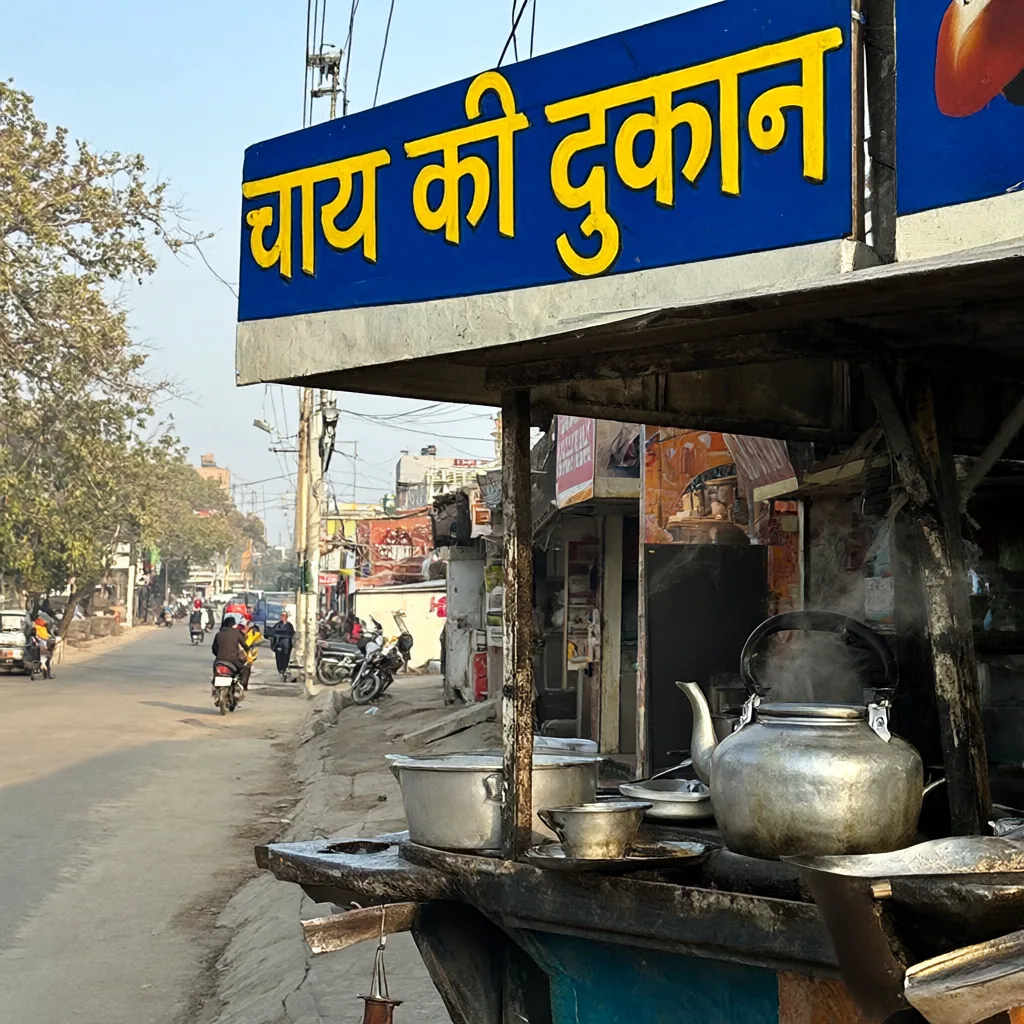
    Prompt (s2b): “A photograph of a small Indian roadside tea stall. A painted signboard above the stall reads exactly “चाय की दुकान” in bold yellow Devanagari letters on a blue background. Morning light, steam rising from a kettle, busy street behind, photorealistic, no other text.”

    Qwen FLUX
    chai-ki-dukan1 chai-ki-dukan2
    “चाय की दुकान” exact “यत्त कीं द्वनान” — 12/12 chars wrong

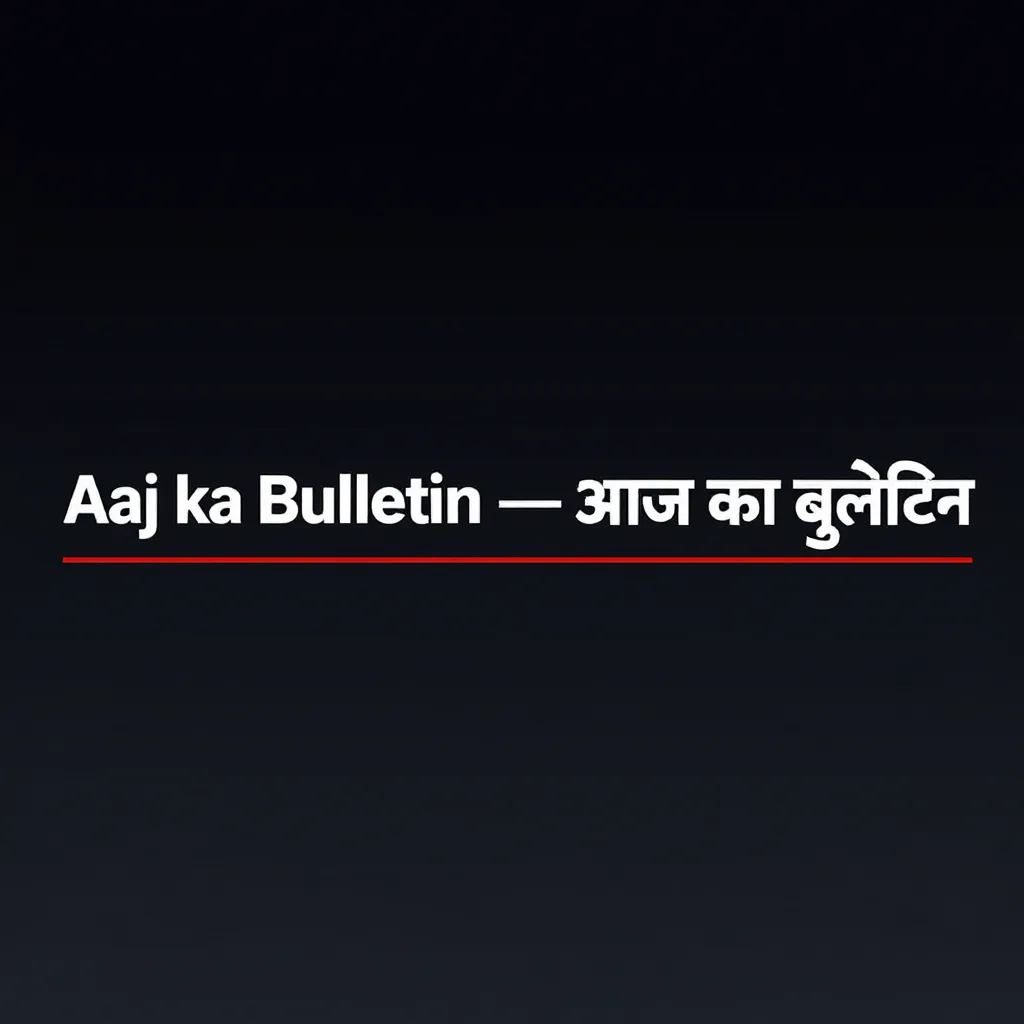
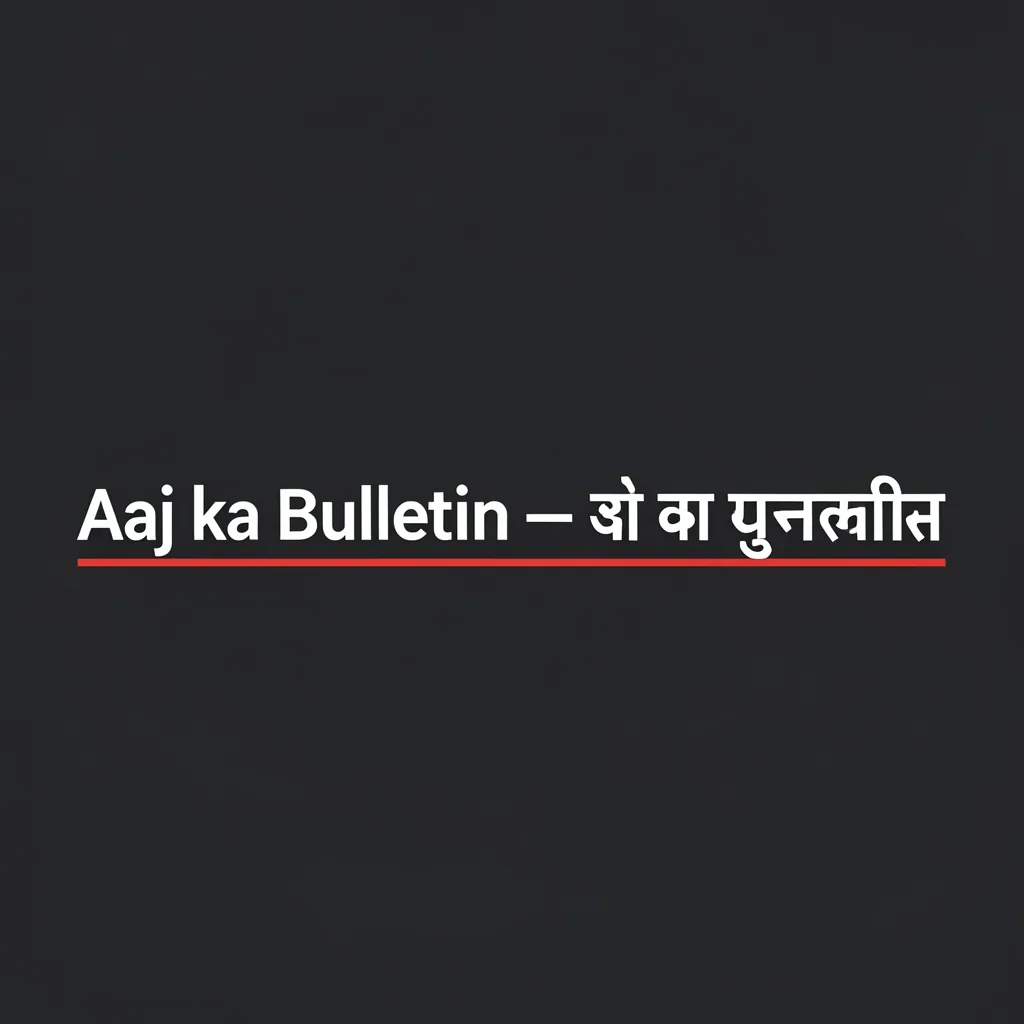
    Prompt (s2c): “A modern television lower-third graphic on a dark background showing exactly one line of mixed Latin and Devanagari text reading “Aaj ka Bulletin — आज का बुलेटिन”, clean white type with a thin red underline beneath it, broadcast quality, no other text.”

    Qwen FLUX
    aaj-ka-buletin1 aaj-ka-buletin2
    Exact, both scripts, correct em dash Latin half perfect, Devanagari half gibberish

    Verdict: Qwen, and it is not close. Qwen rendered every string exactly — correct nuqta on ड़, correct ि attaching to र (not क), correct shirorekha and conjuncts. Roughly 55/55 characters correct versus ~55/55 wrong for FLUX. FLUX’s Latin half of the mixed line was perfect, so the failure is specifically Devanagari. This reproduces an earlier single-poster finding at 3× the sample size. 4.83 vs 3.33.

    Slot 3 — Humans, portrait

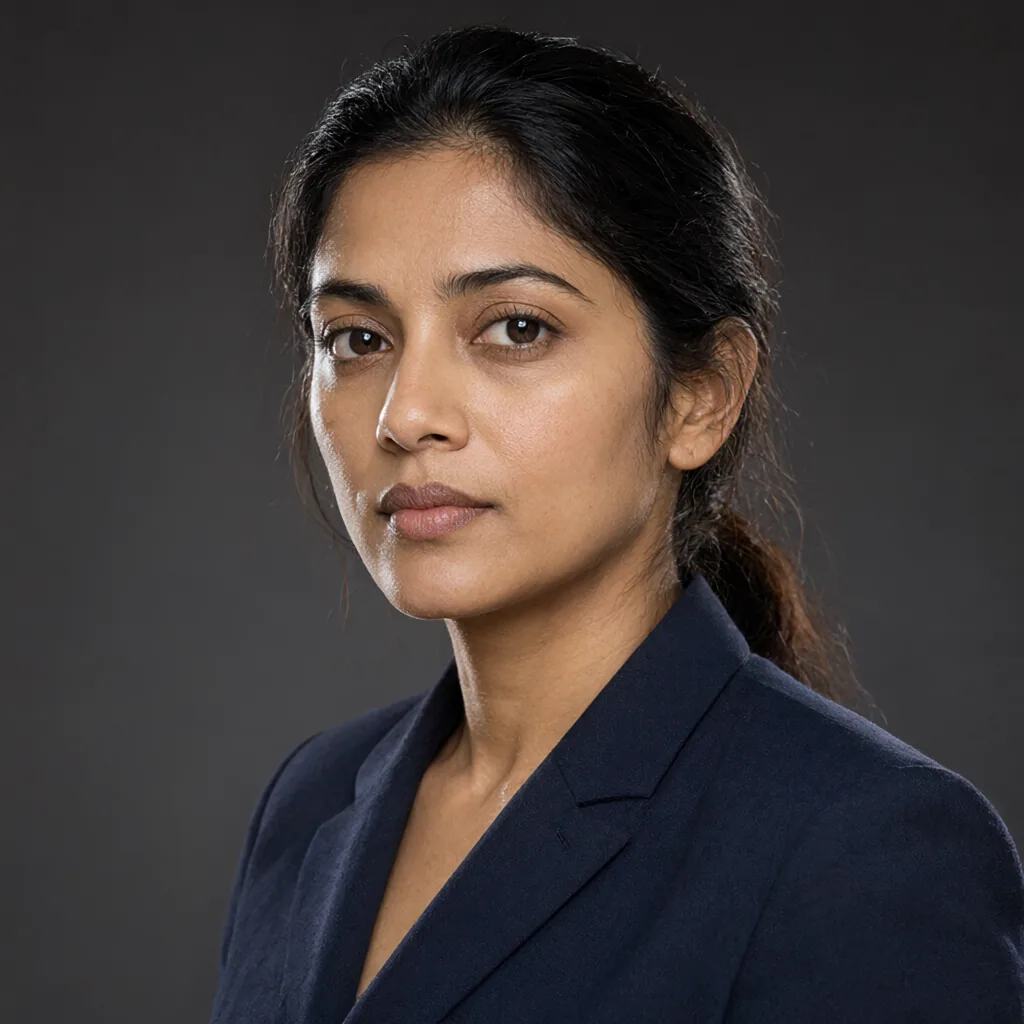
    Prompt (s3a): “Studio portrait photograph of a 32-year-old Indian woman news presenter, three-quarter view turned slightly to her left, natural untouched skin texture with visible pores and fine lines, dark hair tied back, navy blazer, soft key light with a subtle rim light, neutral dark grey backdrop, 85mm lens, photorealistic, no text.”

    Qwen FLUX
    female-half-img1 female-half-img2
    Near-frontal (not ¾), skin smoothed True ¾ view, real pores/moles — best skin in test

    Prompt (s3b): “Close-up photographic portrait of a 60-year-old Indian man, deep forehead and eye wrinkles, salt-and-pepper stubble, wire-rimmed glasses, warm window light from the left, sharp catchlights in the eyes, shallow depth of field, photorealistic, no text.”

    Qwen FLUX
    male-half-img1 male-half-img2
    Reads ~50, moderate lines Convincing 60+, deep wrinkles

    Verdict: FLUX. It hit the requested three-quarter view and produced the best skin texture in the entire test — visible pores, moles, asymmetry. Qwen smoothed. Both models undershot the ages (Qwen ~38/50, FLUX ~45/60+) — if you need a specific age, state a decade and check, on either model. 4.38 vs 4.62.

    Slot 4 — Humans, full body & pose

    Prompt (s4a): “Full-body photograph of a woman in a charcoal blazer and trousers walking down a modern office corridor towards the camera, mid-stride, both feet and both hands fully visible, natural daylight from windows on the left, photorealistic, sharp, no text.”

    Qwen FLUX
    female-full-img1 female-full-img2
    Genuine mid-stride, both hands & feet in frame Equally Good

    Prompt (s4b): “Photograph of a man sitting at a wooden desk typing on a laptop keyboard, both hands clearly visible resting on the keys with all fingers in frame, side-lit modern office, sharp focus on the hands, photorealistic, no text.”

    Qwen FLUX
    user-with-laptop1 user-with-laptop2
    Man absent — cropped to hands + sleeve Man, desk, both hands — as asked

    Verdict: effectively a tie, given to FLUX. Qwen framed the walk better but catastrophically mis-framed the typing shot, cropping to hands and a sleeve and omitting the man entirely despite “a man sitting at a desk” leading the prompt. Qwen’s hands were the cleanest in the test (correct fingers, nails, no fusion); FLUX composed correctly but merged fingers slightly. Neither produced a finger-count failure. 4.25 vs 4.12.

    Slot 5 — Humans, groups & diversity

    Prompt (s5a): “Photograph of four colleagues of different ages and skin tones seated around a meeting table, all four faces fully visible and turned towards the camera: an older Black man, a young South Asian woman, a middle-aged East Asian woman, and a white man in his forties. Bright modern office, photorealistic group shot, no text.”

    Qwen FLUX
    group-pic1 group-pic2
    All four demographics correct Same four, cleaner hands, wider room

    Prompt (s5b): “Photograph of two children playing cricket on a dusty Indian street, one batting with the bat raised and one bowling with the arm in motion, warm late afternoon light, photorealistic, no text.”

    Qwen FLUX
    children-playing1 children-playing2
    Real street cricket, batting stroke Staged, padded kids; garbled signage

    Verdict: Qwen, narrowly. Both nailed the four demographics with all faces to camera. Qwen’s cricket is real street cricket; FLUX’s is two padded-up kids posing, with garbled shop signage across the background — the Devanagari weakness leaking into a non-text prompt. 4.38 vs 4.12.

    Slot 6 — Humans, action & expression

    Prompt (s6a): “Close-up photograph of a woman laughing mid-sentence, mouth open wide, upper teeth clearly visible, eyes crinkled, head tilted back slightly, candid and natural, soft daylight, photorealistic, sharp detail, no text.”

    Qwen FLUX
    women-pic1 women-pic2
    Real teeth, real crow’s feet — dead tie Equally excellent

    Prompt (s6b): “Photograph of a man mid-jump in the air above a concrete plaza, arms and legs fully extended, entire body in frame, low camera angle against a bright sky, motion frozen, photorealistic, no text.”

    Qwen FLUX
    man-jumping-img1 man-jumping-img2
    Airborne, ground shadow present No shadow — reads as pasted in

    Action & expression: a tie, given to FLUX. The laughing shots are a dead tie and both are excellent — real teeth, real crow’s feet. The jump splits the other way on each axis: Qwen’s man casts a proper ground shadow and reads as airborne, but has three legs (two shoes on his left leg) — a limb-count failure the first scoring pass missed. FLUX’s jumper has the right number of limbs but no shadow at all, so he reads as pasted onto the plaza, with an over-long right arm. One model gets the physics right, the other the anatomy; neither jump is usable as is.

    Slot 7 — Reference-image editing

    Prompt (s7a, seeds 11 & 202): “Change her outfit to a navy blue tailored blazer with peaked lapels worn open over a crisp white shirt. Keep her face, hair, pose, expression, lapel mic and the plain background exactly the same.”

    Qwen FLUX
    lady-blue-blazer1 lady-blue-blazer2
    Identity 5/5, but blazer buttoned shut Blazer open as asked, but identity 3/5

    Prompt (s7b): “Replace the background behind her with a modern television newsroom: softly blurred wall monitors, a news desk edge and warm studio lighting. Keep her face, hair, outfit, pose and expression exactly the same.”

    Qwen FLUX
    lady-newsroom1 lady-newsroom2
    Identity 5/5, dress/pose untouched Identity 3/5, face re-made-up

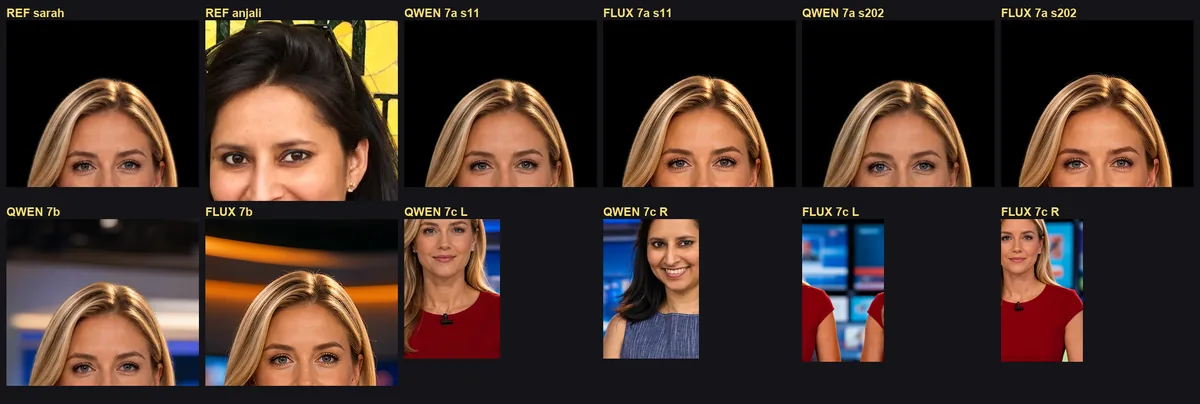
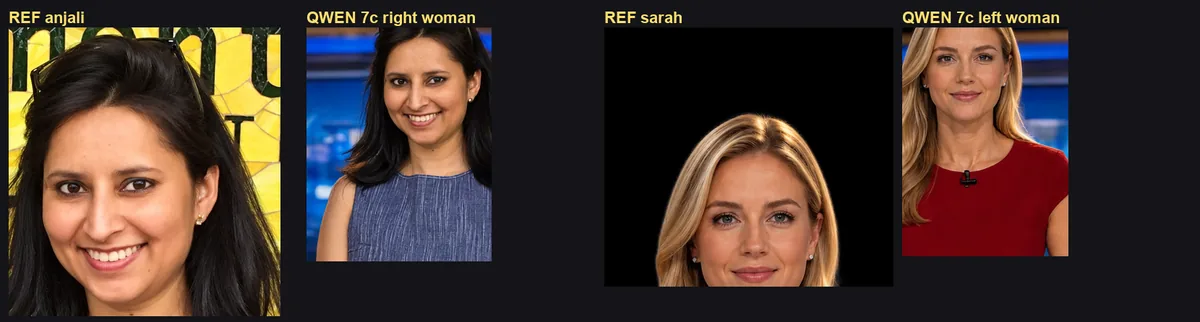
    Prompt (s7c): “Two women standing side by side behind a modern television news desk… The woman on the left is the person from the first reference image and the woman on the right is the person from the second reference image. Preserve both faces, hairstyles and skin tones exactly.”

    Qwen FLUX
    sarah-anjali-pic sarah-twice-pic
    Sarah left, Anjali right — both recognisable Sarah twice — single-ref API limit

    Identity close-up

    identity-close-up-lrg identity-close-up-sml

    Verdict: split — and the split is the useful result.

    • Identity: Qwen 5/5, FLUX 3/5. Across three single-reference edits at two seeds, Qwen kept Sarah’s face essentially unchanged; FLUX re-made her eyes and widened her face every time. This reverses an earlier finding that Qwen beautifies — in this run FLUX was the beautifier.
    • Instruction-following: FLUX 5/5, Qwen 3/5. “Worn open over a crisp white shirt” — FLUX opened it; Qwen buttoned it shut at both seeds.
    • Multi-reference: Qwen only. Given Sarah + Anjali, Qwen placed two genuinely different, genuinely recognisable women at one desk (Anjali near-exact). FLUX produced Sarah twice. This is a capability gap, not a quality gap — the task is not expressible through FLUX’s edit endpoint.

    Category means 4.38 vs 4.06.

    Slot 8 — RGBA / transparent output

    Prompt (s8a): “A single red ceramic coffee mug, product photograph, studio lighting, seen at a slight three-quarter angle with the handle to the right.” — Qwen got the literal transparency wrapper; FLUX got the same subject on flat chroma-green for rembg.

    Qwen (native alpha) FLUX (green) FLUX + rembg
    cup-pic1 cup-pic2 cup-pic3
    Native one-pass RGBA, no spill Chroma-green field Green fringe on handle/rim

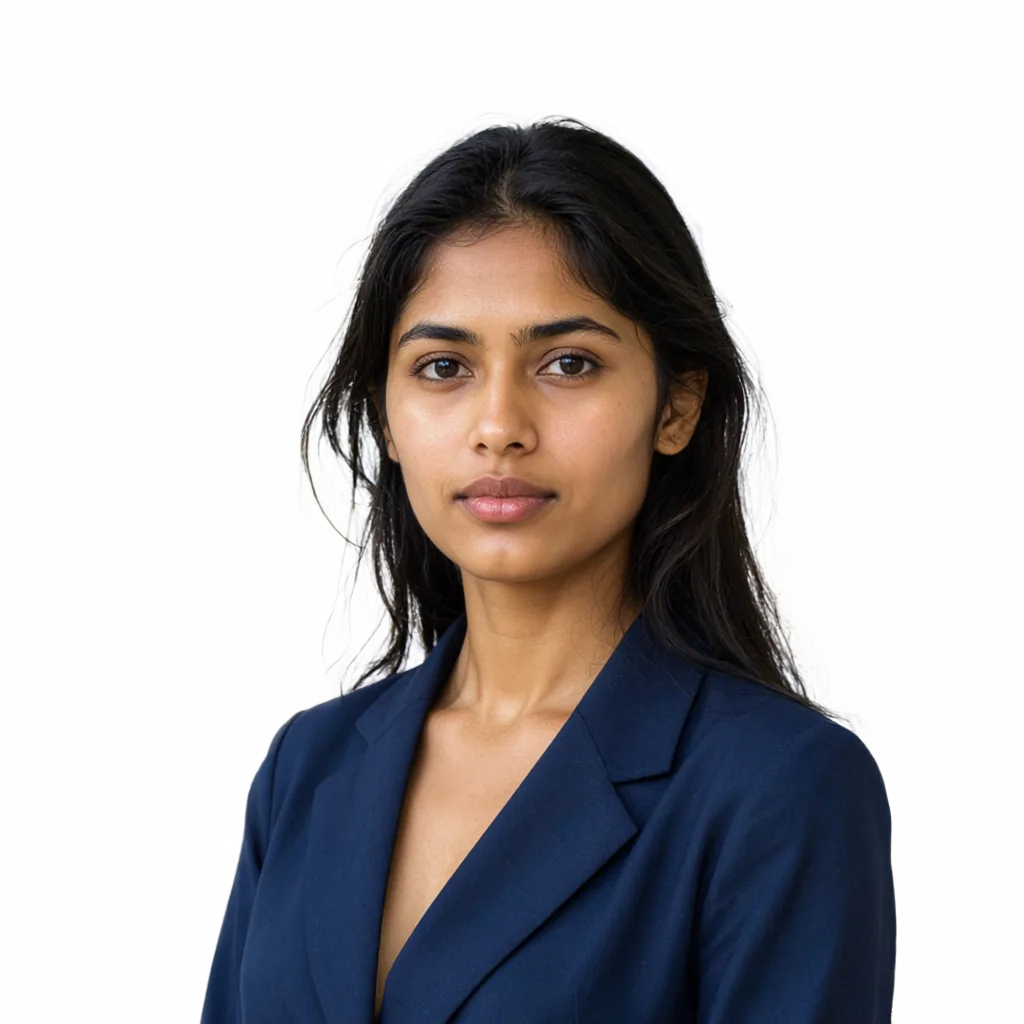
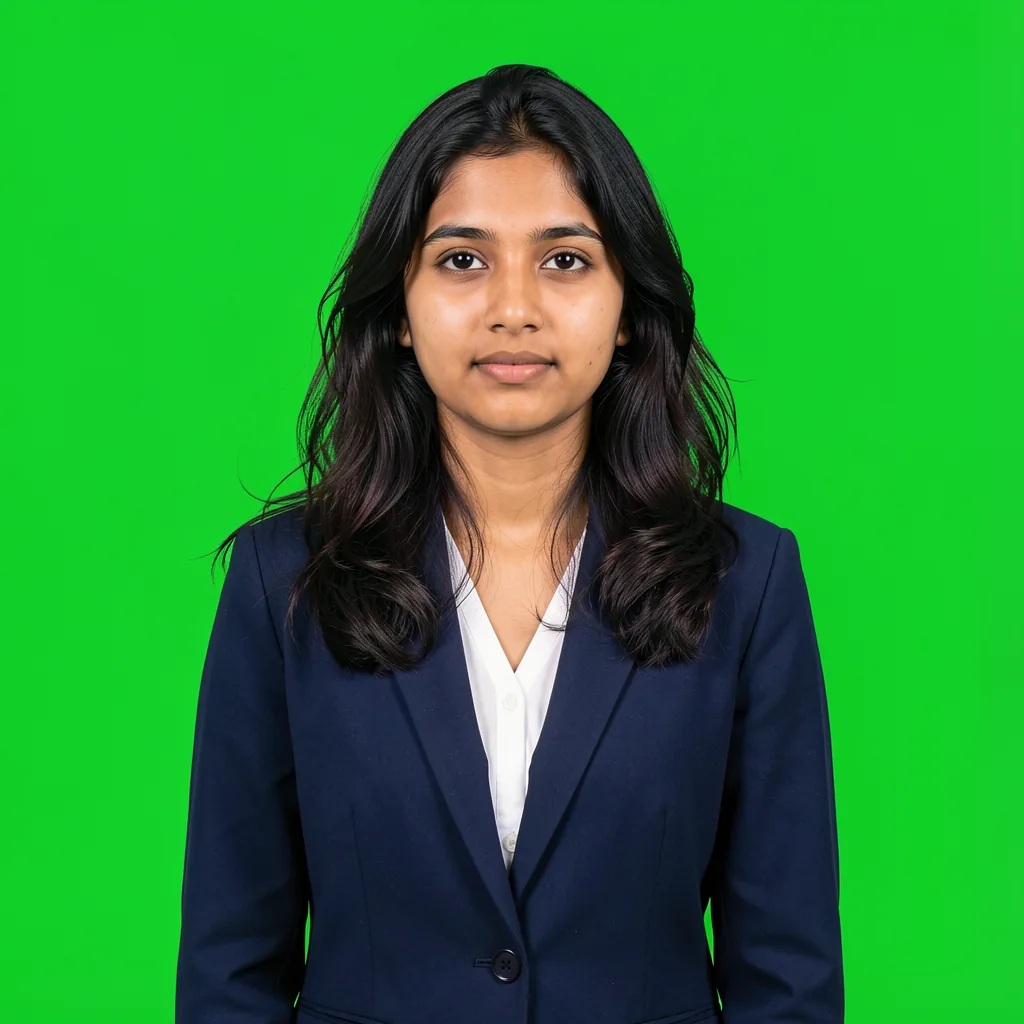
    Prompt (s8b): “A cutout of a young Indian woman in a navy blazer standing and facing the camera, waist up, loose dark hair with fine flyaway strands at the edges.”

    Qwen (native alpha) FLUX (green) FLUX + rembg
    young-indian-woman1 young-indian-woman2 young-indian-woman3
    Real alpha, soft edge Chroma-green field Green halo all around the hair

    Verdict: Qwen wins on the thing that matters. Qwen emits real alpha in one pass with no colour contamination. FLUX + rembg leaves a visible green fringe on the mug handle and a green halo around the hair — unusable without a despill pass. Two measured caveats on Qwen:

    • Its “transparent” background is alpha 1–7, not 0, for ~52–55% of the image (from alpha_stats.json). Composite it over white and you get a faint tint. Fix: threshold alpha < 8 → 0 after generation.
    • rembg’s matte is geometrically cleaner (77% of the mug image exactly alpha 0) and keeps slightly more flyaway hair; Qwen clips fine wisps.
    • Confirming an earlier pitfall: every Qwen output is RGBA mode, including the 24 never asked to be transparent — but their alpha sits at 253–255. Check the histogram, never the mode.

    4.29 vs 4.00.

    Slot 9 — Aspect ratios & speed

    Prompt (s9, three sizes): “A lone red kite flying high above a terraced green hillside at golden hour, thin high clouds, wide natural landscape photograph, photorealistic, no text.”

    Qwen 9:16 (1056×1920, 104 s) FLUX 9:16 (1072×1920, 231 s)
    img-104s img-231s
    Dry brown hillside, near-empty Terraced green hillside, golden hour
    Qwen 16:9 (1280×704, 46 s) FLUX 16:9 (1280×720, 71 s)
    img-46s img-71s
    Same dry hillside miss Textbook rendition
    Qwen 1:1 (1024×1024, 52 s) FLUX 1:1 (1024×1024, 54 s)
    young-indian-woman3 young-indian-woman3
    Greener, still not terraced Best image of the three

    Verdict: FLUX, badly. Same prompt, three ratios; FLUX gave terraced green hillsides at golden hour in all three. Qwen gave dry brown hillsides with barely any terracing and, at 9:16, a near-empty frame. Both read “red kite” as the bird rather than a toy — fair, the prompt is ambiguous — but only FLUX made it red. Qwen’s speed at 9:16 is the one bright spot (104 s vs 231 s). 3.56 vs 5.00.

    Slot 10 — Prompt adherence stress (spatial relations)

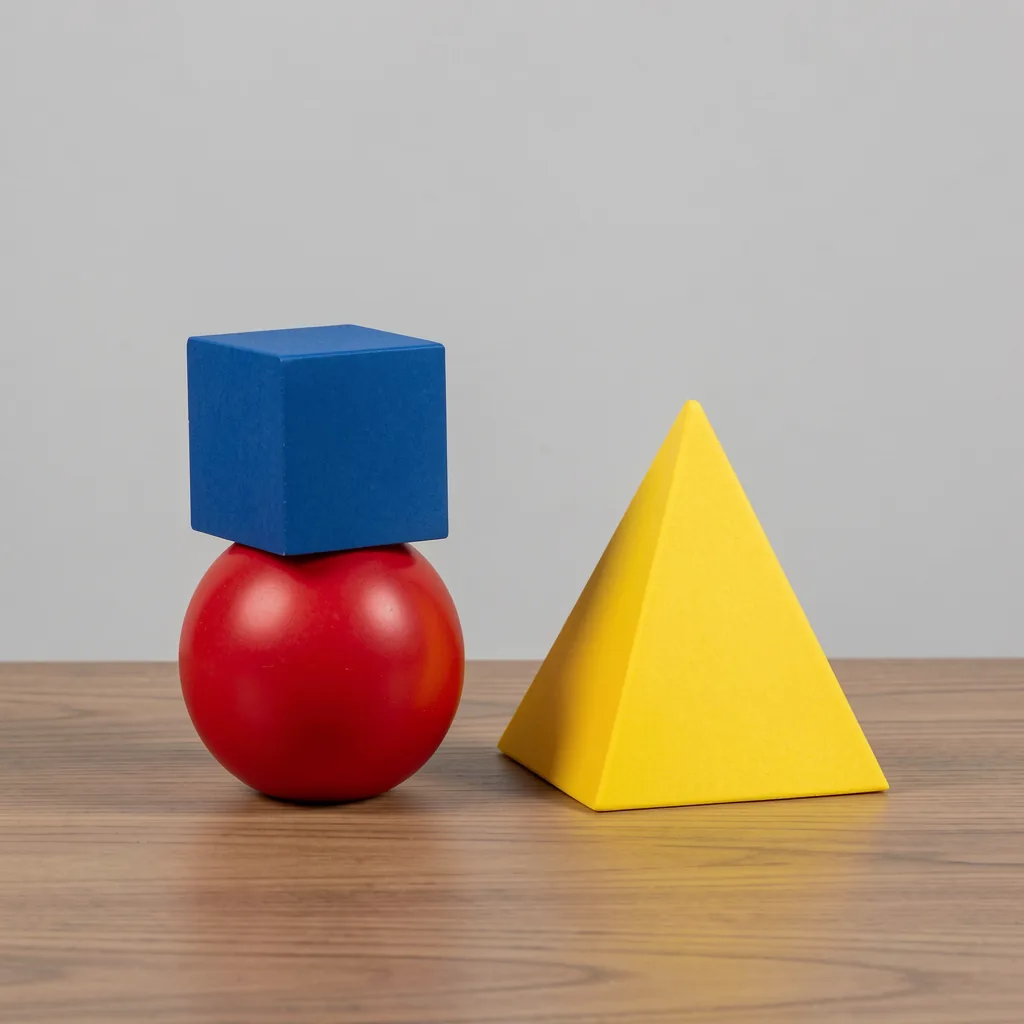
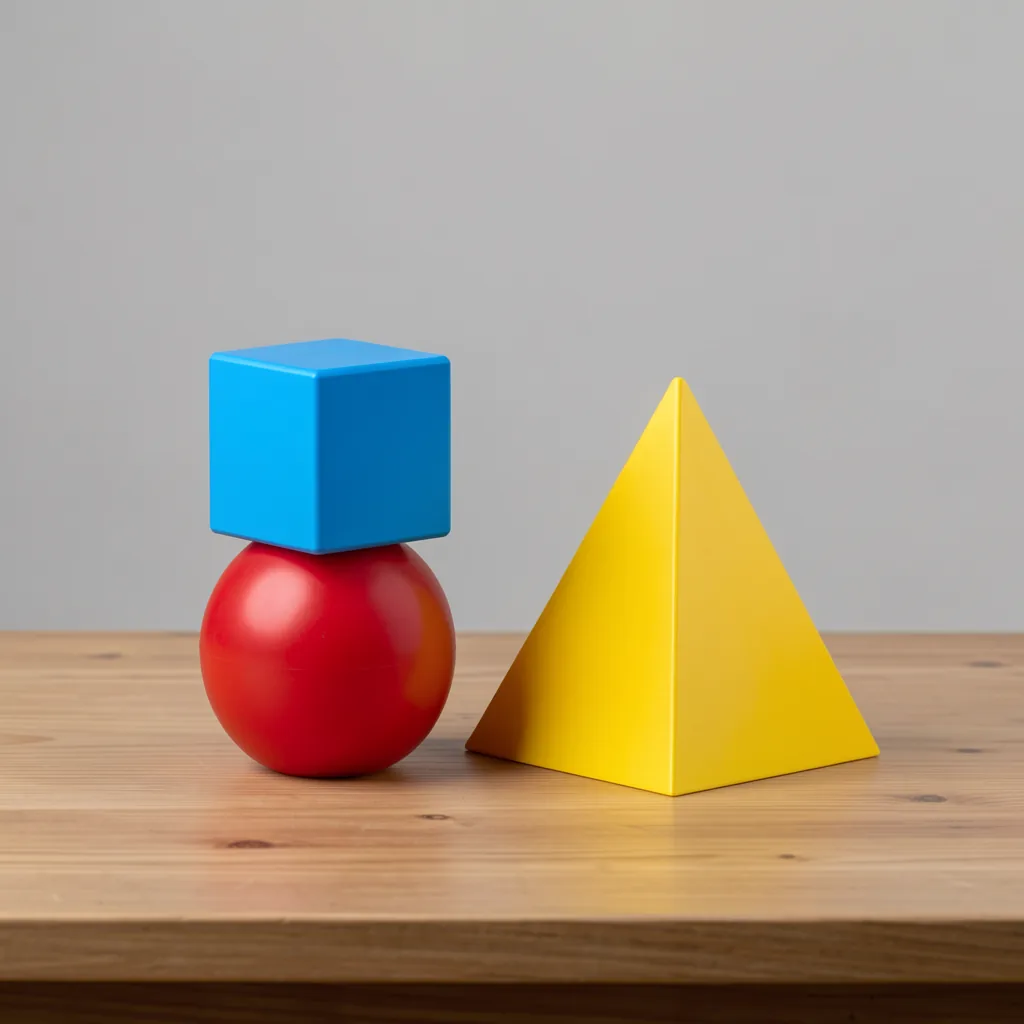
    Prompt (s10, seeds 101 & 202): “A blue cube on top of a red sphere, to the left of a yellow pyramid, on a wooden table, no other objects. Plain neutral studio background, product photograph, photorealistic.”
    Qwen FLUX
    pyramid1 pyramid2
    3/3 relations at seed 101 3/3 relations at seed 101
    pyramid3 pyramid4
    3/3 relations at seed 202 3/3 relations at seed 202
    Verdict: exact tie, 3/3 at both seeds on both models. Neither model has a compositional weakness at this difficulty. 5.00 vs 5.00.

    4. Timings & memory

    Not apples-to-apples: Qwen runs 40 bf16 steps on a GB10, FLUX runs 4 MLX steps on an M3 Ultra.

    Qwen-Image-2.1 FLUX.2 Klein
    Median s/image 51.8 s 28.2 s
    Total for 26 images 1493 s gen + 237 s load = 28.8 min 1196 s gen = 20.0 min
    Amortised load per image 9.1 s ~0.1 s
    Peak memory 38.6 → 46.1 GB 42.0 → 46.3 GB
    1024×1024 t2i 51.7 s 22.6–30.3 s
    1280×720 t2i 45.5 s (→ 1280×704) 21.0 s
    1024×1536 edit, 1 ref 89.3 s 87.0 s
    1080×1920 t2i 104.4 s (→ 1056×1920) 231.2 s (→ 1072×1920)

    Three things worth keeping:

    1. Both models floor requested dimensions — Qwen to ×32, FLUX to ×16.
    2. FLUX’s wall time is not stable across a long batch. The same 1280×720 job took 21.0 s early in the run and 70.8 s late in the run, with a 231 s tall job in between. Qwen’s per-size timing was flat to ±0.3 s across the whole batch. Budget FLUX’s late batch images at 2–3× the early ones.
    3. Qwen at 9:16 is 2.2× faster than FLUX despite running 10× the steps. Tall canvases are where the GB10 earns its keep.

    5. Licensing

    Both models are non-commercial for the weights themselves; the difference is in the outputs. Qwen-Image-2.1 ships under the Qwen Research License Agreement, verbatim from the model card:
    “You are granted a non-exclusive, worldwide, non-transferable and royalty-free limited license … FOR NON-COMMERCIAL PURPOSES ONLY. You shall not use the Materials for any commercial purpose without obtaining a separate commercial license from us.” — clause 2(a)/2(b)
    FLUX.2 Klein 9B — the variant in this test — ships under the FLUX Non-Commercial License (the only Apache-2.0 variants in the family are the 4B and 4B Base). Its weights carry the same non-commercial restriction, but the licence explicitly clears the outputs:
    “We claim no ownership rights in and to the Outputs. … You may use Output for any purpose (including for commercial purposes).” — clause 2(d)
    So the practical difference is not “restricted vs unrestricted”. For the model as a commercial engine, both need a licence from their vendor — Qwen Cloud and Black Forest Labs respectively. For the generated images, FLUX’s terms grant commercial use directly while Qwen’s licence grants no such thing. If you need commercial use of the images without a licence negotiation, that is FLUX’s advantage; if you need it from Qwen, it is a commercial-licence conversation. Beyond licensing, FLUX is already deployed here and Qwen is not — a deployment cost, not a capability difference.

    6. Final conclusion

    Qwen-Image-2.1 is a text-rendering specialist that happens to also do images. FLUX.2 Klein is a general-purpose model with weaker text but broader competence, better realism, and faster median generation.

    What the numbers say

    • Overall: Qwen 4.49, FLUX 4.19. A 0.30 gap that is almost entirely text rendering.
    • Strip the two text slots and FLUX leads. Of the eight remaining categories FLUX wins or ties most of them; Qwen’s non-text wins are narrow (groups, action/expression, reference edits, RGBA).
    • Text is the whole story. Qwen renders English letter-perfect and Devanagari correctly; FLUX renders crisp English with single-character slips and Devanagari as confident gibberish.
    • FLUX wins realism and speed. Best skin texture in the test, correct landscapes at every aspect ratio, and a 28.2 s median against Qwen’s 51.8 s.

    What each model is

    Qwen-Image-2.1 7B FLUX.2 Klein 9B
    Strengths English text, Devanagari, multi-reference identity, native alpha Photorealism, landscapes, aspect ratios, edit instruction-following, speed
    Weaknesses Weak landscapes/aspect ratios, ignores garment-level edit detail, slower median No Devanagari, single-reference edit API, no alpha, text slips
    Licence Research-only weights, no commercial output grant Non-commercial weights, outputs cleared for commercial use

    Verdict in one line

    Two complementary specialists: Qwen owns text and identity preservation, FLUX owns realism and throughput. Neither dominates — the higher overall score rests almost entirely on two text slots.

    Appendix — raw files

    Path Contents
    slot01_text_english/ … slot10_prompt_adherence/ Per-slot qwen_*.png, flux_*.png, sheet_*.png
    slot07_reference_edit/identity_faces.png Face crops: refs vs both models
    slot07_reference_edit/identity_multiref.png Two-reference identity check
    slot08_rgba/flux_*_rembg.png The rembg cutouts
    qwen_raw/, flux_raw/, flux_rembg/ Unsorted originals
    refs/ The two identity references
    qwen_results.json, flux_results.json, alpha_stats.json Machine-readable timings & alpha histograms
    _tables.md Full per-image score tables
    matrix.py The shared prompt source of truth
  • AI Agents vs. AI Workflows: Understanding the Future of Autonomous Business Intelligence

    AI Agents vs. AI Workflows: Understanding the Future of Autonomous Business Intelligence

    Introduction: The Autonomous AI Revolution is Here

    The artificial intelligence landscape is experiencing a fundamental shift. While traditional AI workflows have automated countless business processes, a new paradigm is emerging—one that promises true autonomy and intelligent decision-making without constant human oversight.
    Agentic AI represents this evolution: autonomous systems capable of planning, reasoning, and executing complex tasks independently. Unlike rigid workflows that follow predetermined steps, AI agents dynamically adapt their approach based on real-time conditions, learning from each interaction to deliver optimal outcomes.
    According to Gartner, by 2028, 33% of enterprise software applications will include agentic AI—up from just 1% today. At CodeDeep AI, we’re already building these next-generation solutions for forward-thinking organizations ready to harness this transformative technology.

    What Makes AI Agents Different from Traditional Workflows?

    Understanding the distinction between AI workflows and AI agents is crucial for business leaders evaluating automation strategies.

    AI Workflows: Predetermined Automation

    AI workflows operate like sophisticated assembly lines:
    • Fixed sequences of operations defined in advance
    • Deterministic execution following pre-coded logic
    • Limited adaptability when encountering unexpected scenarios
    • Manual intervention required for exceptions
    Example: A workflow researching “multimodal AI” would execute predetermined steps: search specific keywords → retrieve top 5 results → send to LLM → generate summary. If a website blocks access, the workflow fails.

    AI Agents: Intelligent Autonomy

    Agentic AI operates fundamentally differently:
    • Dynamic decision-making based on available tools and current conditions
    • Self-directed planning breaking complex goals into adaptive sub-tasks
    • Real-time learning from successes and failures
    • Autonomous problem-solving when obstacles arise
    Same example with an agent: Given the research goal and internet access tools, the agent independently determines optimal keywords, evaluates result quality, tries alternative approaches when blocked, and synthesizes findings—all without predefined steps.

    The Seven Key Components of Agentic AI

    Building effective AI agents requires integrating several critical capabilities:

    1. Autonomy

    Agents operate independently, making decisions without constant human guidance—similar to delegating tasks to experienced team members.

    2. Goal-Driven Behavior

    Understanding the end objective, agents intelligently sequence sub-tasks and adjust priorities dynamically.

    3. Planning & Reasoning

    Advanced agents think through problems systematically, evaluating multiple approaches before acting.

    4. Tool Integration

    Access to relevant tools (search engines, databases, APIs, communication platforms) enables agents to accomplish diverse tasks.

    5. Learning & Adaptation

    Agents analyze outcomes in real-time, refining their approach based on what works and what doesn’t.

    6. Memory Management

    Sophisticated memory systems allow agents to track progress, store intermediate results, and maintain context across extended operations.

    7. Security & Governance

    Robust guardrails ensure agents stay focused, operate within defined boundaries, and avoid costly detours.

    Why Businesses Need Agentic AI Now

    The competitive advantages of agentic AI extend far beyond simple automation:
    Enhanced Productivity: Agents handle complex, multi-step tasks end-to-end, freeing knowledge workers for strategic initiatives.
    Scalability Without Limits: Once developed, agents can replicate instantly across your organization, handling increased workload without proportional resource investment.
    Adaptable Intelligence: New tasks don’t require new workflows—simply provide agents with objectives and appropriate tools.
    Cost Efficiency: While individual agent operations consume computational resources, they eliminate the exponential costs of building and maintaining separate workflows for every business process.
    Continuous Improvement: Unlike static software, agents become more effective over time through accumulated experience.

    The Future is Agentic: What’s Coming Next?

    The technology industry is converging on a transformative vision: the Open Agentic Web. Imagine a digital ecosystem where your personal AI agent:
    • Researches products across e-commerce platforms
    • Compares specifications and pricing based on your preferences
    • Places orders and tracks deliveries
    • Manages calendar scheduling with other agents
    • Handles routine communications autonomously
    This isn’t science fiction—major technology companies are actively building these capabilities. Anthropic’s Model Context Protocol (MCP) has already catalyzed explosive growth in agent tools, with hundreds of new integrations emerging in recent months.
    Industry experts predict that by 2028, AI agents will autonomously make at least 15% of day-to-day business decisions—compared to essentially zero today.

    Implementation Architecture: Five Design Patterns

    At CodeDeep AI, we leverage proven architectural patterns when building agentic solutions:

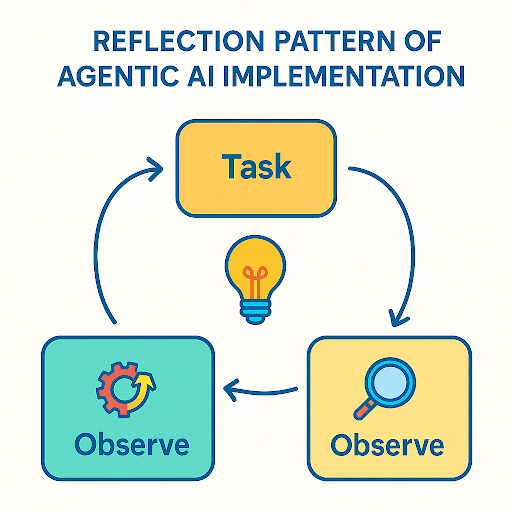
    1. Reflection Pattern

    agentic-implementaion
    Agents generate solutions, then self-evaluate output quality, iterating until meeting standards.

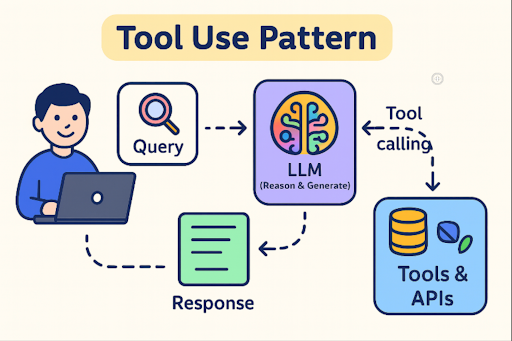
    2. Tool Use Pattern

    tool-use-pattern
    Integration with external capabilities (databases, APIs, services) through standardized interfaces.

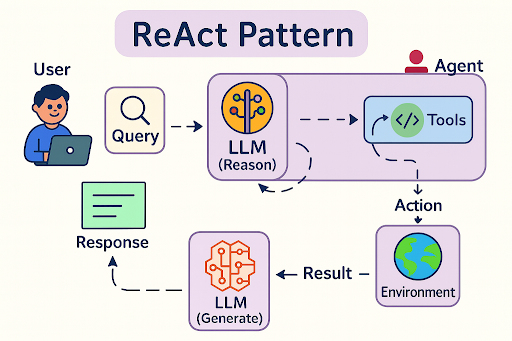
    3. ReAct Pattern (Reasoning + Action)

    react-pattern
    Continuous cycle of reasoning about the problem, taking actions, observing results, and adapting approach.

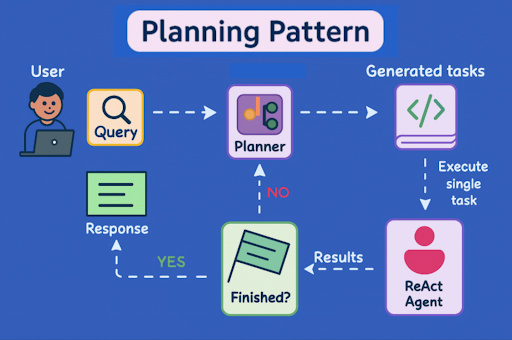
    4. Planning Pattern

    palnning-pattern
    Breaking complex objectives into manageable sub-tasks executed sequentially by specialized sub-agents.

    5. Multi-Agent Pattern

    Specialized agents collaborate, each contributing domain expertise to solve comprehensive challenges.

    The CodeDeep AI Advantage: Custom-Built for Performance

    While frameworks like LangChain, AutoGen, and CrewAI offer rapid prototyping, CodeDeep AI builds custom agentic solutions from the ground up. Why?
    Maximum Performance: Every component optimized for speed and efficiency in production environments.
    Future-Proof Architecture: Direct control allows seamless adaptation as LLM capabilities evolve.
    Deep Transparency: Complete visibility into decision-making processes for debugging, compliance, and optimization.
    Cost Optimization: Eliminate framework overhead and unnecessary abstraction layers that inflate operational costs.
    Our approach delivers production-ready agentic AI that scales reliably while maintaining the flexibility businesses need in rapidly changing markets.

    Addressing the Risks: Not Every Project Needs Agents

    Gartner’s prediction that 40% of agentic AI projects will be cancelled by 2027 reflects an important reality: not every problem requires agentic solutions.
    AI workflows remain the right choice when:
    • Tasks are highly structured with predictable steps
    • Speed and cost-efficiency are paramount
    • The business process rarely encounters exceptions
    • Regulatory requirements demand deterministic behavior
    CodeDeep AI helps clients determine the optimal approach—whether that’s traditional workflows, agentic AI, or hybrid architectures combining both paradigms.

    Transform Your Business with Agentic AI

    The agentic AI revolution isn’t coming—it’s here. Organizations that understand and adopt these capabilities now will define competitive advantage for the next decade.
    Is your business ready to move beyond rigid automation toward truly intelligent systems?

    Partner with CodeDeep AI

    Our team of AI architects and engineers specializes in designing, building, and deploying production-grade agentic AI solutions tailored to your unique business challenges. Schedule a strategic consultation to explore how agentic AI can transform your operations:
    • Assess your automation maturity and readiness
    • Identify high-value agentic AI opportunities
    • Develop a phased implementation roadmap
    • See live demonstrations of agent capabilities
    CodeDeep AI: Building intelligent systems that think, plan, and act—so your business stays ahead.
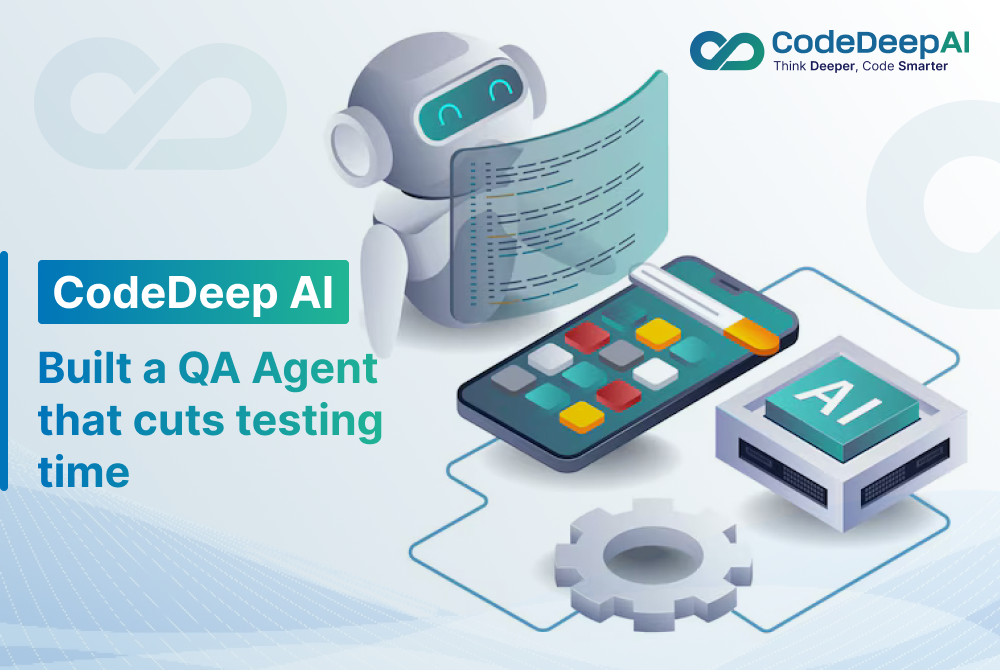
  • AI-Powered Testing Revolution: How CodeDeep AI Built an Intelligent QA Agent That Cuts Regression Cycles from Days to Minutes

    AI-Powered Testing Revolution: How CodeDeep AI Built an Intelligent QA Agent That Cuts Regression Cycles from Days to Minutes

    Introduction

    What if your QA team could test an entire web application using plain English commands—no hard-coded selectors, no brittle automation scripts, and no days spent debugging flaky tests?
    At CodeDeep AI, we’ve transformed this vision into reality. Our AI-powered testing agent performs comprehensive end-to-end functional tests on any web application using natural language instructions, delivering what traditionally takes days in just minutes.
    The result? 85-90% test success rates, automated test case generation, and a complete elimination of maintenance-heavy test scripts that break with every UI update.

    The Challenge: Traditional Test Automation is Broken

    Modern development teams face a critical bottleneck: traditional test automation is fragile, time-consuming, and expensive to maintain. Hard-coded selectors break with every interface change. QA engineers spend more time fixing tests than finding bugs. Regression cycles stretch across days or weeks, delaying releases and frustrating stakeholders.
    The core problem? Conventional automation treats testing as rigid, procedural code rather than intelligent verification of user workflows.

    Our Solution: An AI Agent That Tests Like a Human QA Engineer

    CodeDeep AI’s intelligent testing solution fundamentally reimagines functional testing. Instead of scripting brittle automation, our AI agent reads plain-language test scenarios and executes them the same way a human QA engineer would—but with machine precision and speed.

    Three Core Capabilities

    1. Intelligent Test Case Generation

    Our system generates comprehensive test cases from simple requirements:

    • Global context awareness: Define login URLs, navigation patterns, and environment variables once
    • Requirement-based generation: Describe what needs testing in plain English
    • Automatic step sequencing: The AI creates logical test flows with verification points
    • Pass dependency management: Configure which tests must succeed before others execute
    1. Autonomous Test Execution

    Watch as the AI agent:

    • Spins up isolated browser environments for each test run
    • Navigates interfaces without hard-coded selectors
    • Fills complex forms with dynamically generated valid data
    • Captures screenshots and structured logs at every critical step
    • Stores context in memory to handle multi-step workflows (e.g., creating a company in step 2, then verifying it exists in step 3)
    • Delivers CI/CD-ready results in standardized formats
    1. Interactive Testing Interface

    When building new test cases, use natural language or voice commands to:

    • Execute individual test steps in real-time
    • Validate your test logic before committing to automation
    • Troubleshoot complex workflows interactively
    • Refine instructions based on live browser feedback
     

    Real-World Impact: The Numbers That Matter

    Our testing agent delivers measurable business value:
    • 85-90% success rate on properly functioning applications
    • 95% reduction in regression testing time (days to minutes)
    • Zero selector maintenance eliminates the primary source of test brittleness
    • Automatic retry logic handles LLM variability with intelligent self-correction
    • Complete audit trails with screenshots, logs, and structured verdicts
    For one internal application—a meeting recording platform with complex multi-step forms—our agent executed comprehensive testing in under 15 minutes, including login verification, project creation, participant management, and meeting setup validation.

    The Technology Behind the Intelligence

    Building production-grade AI testing required solving several complex challenges:

    Multi-Agent Architecture

    Our system employs specialized agents working in concert:
    • Browser agent: Interprets UI and executes interactions
    • Memory agent: Maintains context across test steps using MCP (Model Context Protocol)
    • Orchestration layer: Manages test sequencing and dependency resolution

    LLM Selection and Optimization

    We developed a comprehensive evaluation framework to identify the optimal language model for testing scenarios. After evaluating over 15 different LLMs, we focused on two critical metrics:
    1. Tool use proficiency: How effectively models interact with browser automation APIs
    2. Instruction following accuracy: Precision in executing multi-step test procedures
    This evaluation framework itself represents significant intellectual property—a systematic approach to matching LLMs with specific use cases based on quantitative performance data.

    Dynamic Data Generation

    Unlike traditional tests with hard-coded values, our agent generates contextually appropriate test data on the fly:
    • Unique timestamps for entity naming
    • Valid email formats using services like YopMail
    • Form-appropriate values based on field analysis
    • Randomized but realistic content for text fields

    What This Means for Your Development Team

    Implementing AI-powered testing with CodeDeep AI transforms your QA workflow:
    For QA Teams: Focus on exploratory testing and edge cases instead of maintaining fragile automation scripts. Write tests in plain language that business stakeholders can review.
    For Developers: Ship features faster with confidence. Comprehensive regression testing runs automatically on every commit without blocking deployments.
    For Engineering Leaders: Reduce QA infrastructure costs while improving coverage. Eliminate the specialized skills gap in test automation maintenance.
    For Business Stakeholders: Accelerate time-to-market while reducing quality risk. Get clear, readable test reports that map directly to business requirements.

    The Future of Intelligent Testing

    We’re actively expanding our capabilities. The next evolution: fully automated test case authoring from user flows and screenshots. Simply provide visual examples of your application workflows, and our AI will generate complete test suites automatically.
    This represents the ultimate vision—QA that requires minimal human input while delivering comprehensive coverage and actionable insights.

    Why CodeDeep AI?

    Our testing solution exemplifies our broader approach to AI product development:
    • Production-ready reliability: We don’t just build demos; we create systems you can trust in production
    • Deep technical expertise: From LLM evaluation frameworks to multi-agent architectures, we solve hard problems
    • Business outcome focus: Every capability maps to measurable value—time saved, costs reduced, quality improved
    • Continuous innovation: We’re pushing boundaries in AI applications, not just implementing existing patterns

    Experience the Future of QA: Book Your Demo Today

    Ready to eliminate brittle test scripts and slash your regression cycles?
    CodeDeep AI is offering exclusive demo sessions where we’ll walk you through our intelligent testing platform and discuss how it can transform your specific QA challenges.
    During your personalized session, we’ll:
    • Demonstrate live test execution on a sample application
    • Discuss integration with your existing CI/CD pipeline
    • Explore custom configuration for your tech stack
    • Provide a roadmap for implementation
    Schedule Your Demo
    Or reach out directly to discuss your testing challenges: [email protected]
    CodeDeep AI: Transforming possibilities into production-ready AI solutions that drive real business impact.
  • Transform Your Web Applications with AI Agents: The Future of User Interaction is Here

    Transform Your Web Applications with AI Agents: The Future of User Interaction is Here

    Introduction: Why Every Web Application Needs an AI Agent

    The way users interact with web applications is undergoing a fundamental transformation. As businesses scale and web applications become more complex, users increasingly struggle with navigation, data discovery, and task completion. What if your users could simply tell your application what they need—in any language, through voice or text—and get instant results?
    At CodeDeep AI, we’ve developed a game-changing solution that adds intelligent AI agents to existing web applications without requiring a single line of code change. This isn’t just another chatbot—it’s a sophisticated orchestration layer that understands context, manages authentication, and performs complex multi-step operations on behalf of your users.

    The Challenge: Complexity Overwhelming User Experience

    Modern enterprise applications face a critical usability crisis. Consider a typical scenario: managing 50+ servers through a monitoring dashboard. Users must:
    • Navigate through multiple menus and interfaces
    • Remember where specific features are located
    • Manually correlate data from different sections
    • Perform repetitive tasks across similar resources
    This complexity leads to decreased productivity, increased training costs, and user frustration—especially when users need just one specific piece of information from a feature-rich application.

    How AI Agents Transform Application Interaction

    Understanding AI Agent Architecture

    An AI agent is fundamentally different from traditional automation. It’s an intelligent system where a Large Language Model (LLM) orchestrates actions dynamically.
    Figure 1: CodeDeep AI’s Agent Architecture – Seamless integration without code changes
    As illustrated in our architecture diagram above, the entire process flows through several key components:
    1. User Interaction Layer: Users communicate through a Chat UI using voice or text
    2. AI Agent with Guardrails: The core orchestration engine powered by an LLM
    3. MCP Server Integration: Connects to your existing RESTful APIs
    4. Transformation Layer: Converts raw data into rich, presentable HTML
    5. Direct Database Access: Optional direct data retrieval when needed
    Here’s what makes it revolutionary:
    • Task Understanding: Users describe what they want in natural language
    • Tool Selection: The agent autonomously determines which tools and APIs to use
    • Sequential Processing: It figures out the optimal order of operations
    • Adaptive Response: Results are transformed into the most appropriate format

    Real-World Implementation: The G8keeper Case Study

    Our demonstration with G8keeper, a server monitoring application, showcases the transformative power of AI agents: Traditional Approach:
    • Navigate to server list
    • Select specific server
    • Find CPU usage section
    • Interpret graphs manually
    • Repeat for multiple metrics
    AI Agent Approach:
    • User asks: “Show me CPU usage for test server for last 15 minutes”
    • Agent automatically retrieves, processes, and visualizes the data
    • Results appear instantly in charts and tables

    Key Capabilities That Set Our Solution Apart

    1. Zero Code Integration

    The most remarkable aspect of our AI agent implementation is its non-invasive nature:
    • Complete separation from existing application code
    • Works through existing RESTful APIs or database connections
    • Deploys as an independent layer
    • No risk to production systems

    2. Multi-Modal Communication

    Users interact naturally through:
    • Voice Commands: Speak requests in any language
    • Text Input: Type queries in natural language
    • Mixed Inputs: Combine voice and text seamlessly
    • Multilingual Support: Demonstrated with English and Hindi, extensible to any language

    3. Intelligent Memory Management

    Our agents don’t just respond—they remember:
    • Store important data points for future reference
    • Compare current state with historical data
    • Track changes over time
    • Provide context-aware responses

    4. Dynamic Visualization

    Unlike static dashboards, AI agents create visualizations on demand:
    • Generate charts based on specific queries
    • Format data optimally for each use case
    • Combine multiple data sources intelligently
    • Present information in the most consumable format

    The Business Impact: Measurable ROI

    Implementing AI agents delivers immediate and quantifiable benefits:

    For Operations Teams

    • 90% reduction in time to find specific information
    • Zero training required for new features
    • 24/7 availability for critical queries
    • Instant correlation across multiple data sources

    For Development Teams

    • No code changes to existing applications
    • Rapid deployment (days, not months)
    • Reduced support tickets through contextual help
    • Future-proof architecture that evolves with AI capabilities

    For Business Leaders

    • Improved user satisfaction through intuitive interaction
    • Reduced operational costs via automation
    • Competitive advantage with cutting-edge user experience
    Scalable solution that grows with your needs

    Technical Excellence: Built for Enterprise

    Our AI agent framework incorporates enterprise-grade features:
    • Authentication & Authorization: Respects existing user permissions
    • Model Context Protocol (MCP): Industry-standard integration
    • Tool Orchestration: Seamlessly combines multiple tools and APIs
    • Flexible Deployment: Cloud, on-premise, or hybrid options

    Beyond Basic Automation: The Intelligent Difference

    What distinguishes AI agents from simple automation:
    1. Contextual Understanding: Agents understand the intent behind requests
    2. Adaptive Processing: They adjust their approach based on available data
    3. Error Handling: Intelligent fallbacks when data is unavailable
    4. Continuous Learning: Improves responses based on usage patterns

    The Future is Conversational

    We firmly believe that all web applications will need to provide agent capabilities for their users. As applications grow more complex, the traditional point-and-click interface becomes a bottleneck. AI agents represent the next evolution in human-computer interaction—making powerful applications accessible to everyone, regardless of technical expertise.

    Transform Your Application Today

    Ready to revolutionize how users interact with your web application? CodeDeep AI’s AI agent solution can be integrated with your existing systems in days, not months—with zero code changes required.

    Take the Next Step:

    • Schedule a Demo: See our AI agents in action with your specific use case
    • Get a Proof of Concept: We’ll build a custom agent for your application
    • Download Our Whitepaper: Learn more about our technical architecture and implementation approach 
    Contact our team at CodeDeep AI to discover how AI agents can transform your application’s user experience and unlock new levels of productivity for your organization. Book Your Free Consultation
    CodeDeep AI specializes in developing cutting-edge AI applications and solutions that transform how businesses operate. Our expertise in AI agents, LLM integration, and enterprise software positions us as your ideal partner in the AI transformation journey.